
< Back to People List
Dr. Joyce C.H. Liu 劉紀蕙
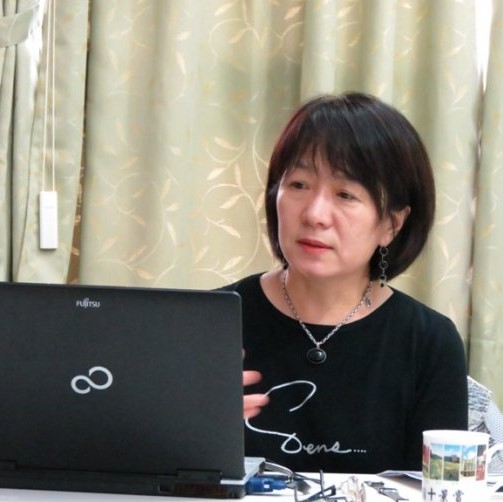
Professor Emerita, Director of the International Center for Cultural Studies, NYCU
Email: joyceliu@nycu.edu.tw
Joyce C.H. Liu, Professor Emerita, currently serves as the Director of the International Center for Cultural Studies at National Yang Ming Chiao Tung University. Her research focuses on geopolitics, biopolitics, border politics, internal coloniality, unequal citizens, and epistemic/artistic decolonization. She coordinates interdisciplinary and trans-national joint research projects: Conflict, Justice, and Decolonization: Critical Studies of Inter-Asian Societies (MOE SPROUT 1.0, 2018-2022), Conflict, Justice, and Decolonization: Asia in Transition in the 21st Century (MOE SPROUT 2.0, 2023-2027), “Migration, Logistics, and Unequal Citizens in the Global Context” (2019-2022), CHCI-Mellon Foundation, and “Transit Asia Research Network” (TARN) (2023-2027). Dr. Liu received the 2020 MOST Outstanding Research Award, reflecting her lifetime achievements.
Dr. Liu is the author of seven books: 心態史拓撲學:如何面對當代?如何理解歷史?(The Topology of the History of Mentalities: How to Face the Contemporary? How to Comprehend the History?, 2023), 一分為二:現代中國政治思想的哲學考掘學 (One Divides into Two: Philosophical Archaeology of Modern Chinese Political Thought, 2020), 心之拓樸:1895事件後的倫理重構 (The Topology of Psyche: The Post-1895 Reconfiguration of Ethics (2011), 心的變異:現代性的精神形式 (The Perverted Heart: The Psychic Forms of Modernity, 2004), 孤兒女神負面書寫-文化符號的徵狀式閱讀 (Orphan, Goddess, and the Writing of the Negative: The Performance of Our Symptoms, 2000), and more than 100 peer-reviewed journal articles and book chapters, in Chinese and English. She has also edited 19 volumes of academic books, including East-Asian Marxisms and their Trajectories (Routledge 2017), European- East Asian Borders in Translation (Routledge 2014), Biopolitics, Ethics and Subjectivation (Paris: L’Harmattan, 2011).
Over the years, Dr. Liu has conducted 34 research projects, organized 28 domestic and international conferences, and supervised 28 Ph.D. Dissertations, 58 MA theses. Her students are from Taiwan, Hong Kong, China, Vietnam, Malaysia, Indonesia, the Philippines, India, Italy, Poland, Belgium, Palestine, Jordan, Uzbekistan, Ukraine, South Africa, the Democratic Republic of the Congo, Haiti, and others.
Research Project
A Critical Genealogy of the Logistics of the Forced Migratory Labor in the Asian Mediterranean Sea
“Taiwanese Sold by Taiwanese—Escape from the Scam Industrial Park. A confession of a Human Trafficking Victim” (August 10, 2022), a recent report by the independent Taiwanese media, The Reporter, exposed the stories of Taiwanese people trapped by human- smuggling groups in Sihanoukville Special Economic Zone, Cambodia. Sihanoukville is a port city famous for its role as a gateway to international sea trade, casinos, and organized crimes. Today it is one of the major cities in China’s One Belt One Road Initiative, and more than 80,000 Chinese live in this city. Chinese entrepreneurs run the organized scam industries with Cambodian elites, assisted by Taiwanese gangs to recruit people. According to Al Jazeera’s documentary on July 15, 2022, “Forced to Scam: Cambodia’s Cyber Slaves,” the smuggled victims have to work 15 hours a day on a cryptocurrency romance scam or a cryptocurrency investment scam. The victims are from China, Malaysia, Indonesia, Thai, Vietnam, and Burma. The criminal enterprises of the Global Scam operations involve massive corruption of high-level officials, both the Cambodian elites and the Chinese entrepreneurs. The sites of the cyber scam enterprises scatter around various places, from the port cities to Phnom Penh and the northern borders of Myanmar, Vietnam, and China.
This project intends to trace the genealogy of the sea route of forced migration that links Northeast and Southeast Asia through the Asian Mediterranean Sea. The core research question is about the nature of forced labor’s institutionalized logistics that persist throughout histories. My argument is that the logistics that facilitate the flow of forced migrant labor date back to the feudal tribute system over thousands of years, from the pre-modern era to the 21st century. The institution and technology of the logistics went through a long history of metamorphosis, but the nature of the mediating institution remains unchanged. Pig is the term used for the coolies in the 19th and 20th centuries, through cheating or kidnapping poor people in the rural villages, the labor force that cost nothing, operated by the broker system to ship the indentured laborers to Southeast Asia and other parts of the world. The pig of the 21st century serves different kinds of labor but is still in the same mode of slavery, with torture and unaccounted death. Port cities turn out to be the chokepoints for the supply chain for the commodities, including crude labor force, through the water route. The objective of this study is to propose a perspective of critical legal study that challenges the persistence of the legalized institutions that legitimate and rationalize the extraction of labor and ignore the fundamental equality of all human lives.
Recent Publication
Journal Papers
劉紀蕙。〈佛洛伊德、巴禮巴與「文明性」的悖論:政治拓撲學的難題〉。《文化研究》,38 2024.06[民113.06],頁11-41。
Liu, Joyce C.H. “Cyber Slavery, Port Cities and Systemic Cruelty: Logistics of Labor Extraction in the 21st Century“. Innovation in the Social Sciences 1.2 (2023): 211-233. https://doi.org/10.1163/27730611-bja10014
Liu, Joyce C.H. “Re-Reading Zhang Taiyan against François Julien: Ontology and Political Critique in Chinese Thought.” Theory, Culture & Society. Volume 40, Issue 4-5. 1-18. First published online June 5, 2023. https://doi.org/10.1177/02632764231169926.
Liu, Joyce C.H. “The Logistics of Neoliberal Slavery: Legal Production of Illegality.” Inter-Asia Cultural Studies. Vol. 23, Issue 1 (2022): 110-120. https://doi.org/10.1080/14649373.2022.2026598
Journal (Guest Editor)
Joyce C.H. Liu. Guest Editor. Special Issue: The Legal Ambiguity of the State Crime and the Making of Statelessness. Innovations in the Social Sciences 2 (2024).
Joyce C.H. Liu & John Hutnyk. Eds. Identities on the move: migration, logistics and unequal citizens in contemporary global context, Social Identities: Journal for the Study of Race, Nation and Culture. Vol. 28, 2022.
Book Chapters
Liu, J. C. H. (2025). “Transit Asia and the Geopolitics of Decolonisation: Toward a New Radical Solidarity.” Joyce C.H. Liu & Brett Neilson. Decolonisation in the 21st Century: Rethinking Coloniality, Resistance and Solidarity. Eds: Joyce C.H. Liu and Brett Neilson. Routledge 2025. In Process.
Liu, J. C. H. (2025). “All-Under-Heaven, Networked Underground: The Limits of Tianxia 2.0.” | Joyce C.H. Liu.’ Decolonisation in the 21st Century: Rethinking Coloniality, Resistance and Solidarity. Eds: Joyce C.H. Liu and Brett Neilson. Routledge 2025. In Process.
Liu, J. C. H. (2025). “A Critical Genealogy of Forced Migratory Labor in the Asian Mediterranean Sea”. In Entangled Waterscapes in Asia. Leiden, The Netherlands: Brill. 17-40. ISBN: 978-90-04-71917-0. https://doi.org/10.1163/
Liu, Joyce C. H., Yu-Fan Chiu, and Jonathan S. Parhusip. “Logistics of Maritime Capitalism: Flags of Convenience and the Statelessness at Sea.” In Sites of Statelessness: Laws, Cities, Seas, edited by Ayşe Çağlar, Sabyasachi Basu Ray Chaudhury, and Ranabir Samaddar, 217–34. State University of New York Press, 2024. https://doi.org/10.2307/jj.20829470.16.
Liu, Joyce C. H. “BRI, Logistics, and Global Infrastructure: New World Order, the Game of Go and the Dispositif of Shi (勢).” The Strategic and Economic Impact of China´s Belt and Road Initiative: Central Asia, Southeast Asia and Central Eastern Europe. Eds. Alfred Gerstl and Ute Wallenbock. Routledge; Rethinking Asia and International Relations Series. 2020: 143-165.
Book (Editor)
Decolonisation in the 21st Century: Rethinking Coloniality, Resistance and Solidarity. Eds: Joyce C.H. Liu and Brett Neilson. Routledge 2025. In Process.
Keynote Speeches, Invited Lectures, International Conference and Seminars (selective)
“Digital Tianxia, Ressentiment, and the Struggle for Alternatives.” CHCI Annual Meeting: Ressentiment. June 23-25, 2025. Berlin, Germany.
“Tianxia 2.0: China’s Geopolitics in the 21st Century.” The Center for Social Innovation and Foreign Policy (CESIF), Kathmandu, Nepal. Nov. 21, 2024.
“The South of the South: The Case of Kaohsiung Port City in Southern Taiwan.” City as the Southern Question. CRG, Kolkata, India. Nov. 13-13, 2024.
Compound Capitalism, Samoan Supply Chains, and SEZs: The Darker Side of China’s Tianxia 2.0. The Production and Reproduction of Social Inequalities. ICCS-NYCU in collaboration with the Social Inequalities Research Unit (SIRU), University of Cologne, Germany. September 20-21, 2024.
“The New Order of Tianxia and its Underground Rhizomes: Compound Capitalism, SEZs, and Digital Automation,” Industry-led Operations of Capital in the 21st Century: Geo-Politics, Digital Governance, Labor Migration, and Artistic Intervention. Asian Institute of Technology. Bangkok, Thailand. 1-4 August, 2024.
“The Order of Tianxia and the Philosophy of Co-Becoming: Paradox, Opportunity, or the Starting Point of Analysis?” International Conference on the Order of Tianxia and the Philosophy of Co-Becoming. National Sun Yatsen University. Kaohsiun, Taiwan.August 22-24, 2024.
Seminar: “Can Artistic Practice be a Decolonization Project?” The 3rd Internal Biennale on Practical Philosophy. April 19-23, 2024. The University of the Aegean. Rhodes Island, Greece.
Keynote: Art and Ecology After the Pandemic: Worlds Beyond, Worlds Within. Academic Guest to the School of Humanities (SOH), National Technological University, Singapore. 1-5 February 2024.
Keynote: “The Historical Paradox of Confucian Restoration between the Emancipatory Confucianism.” The Intersection and Practice of Modern Philosophy and Thought in China and Japan. Institute for Research in Humanities, Kyoto University. January 31st. Kyoto.