2026 TARN Meeting
Chip Era, Governance, Infrastructure, Labour, Mobility
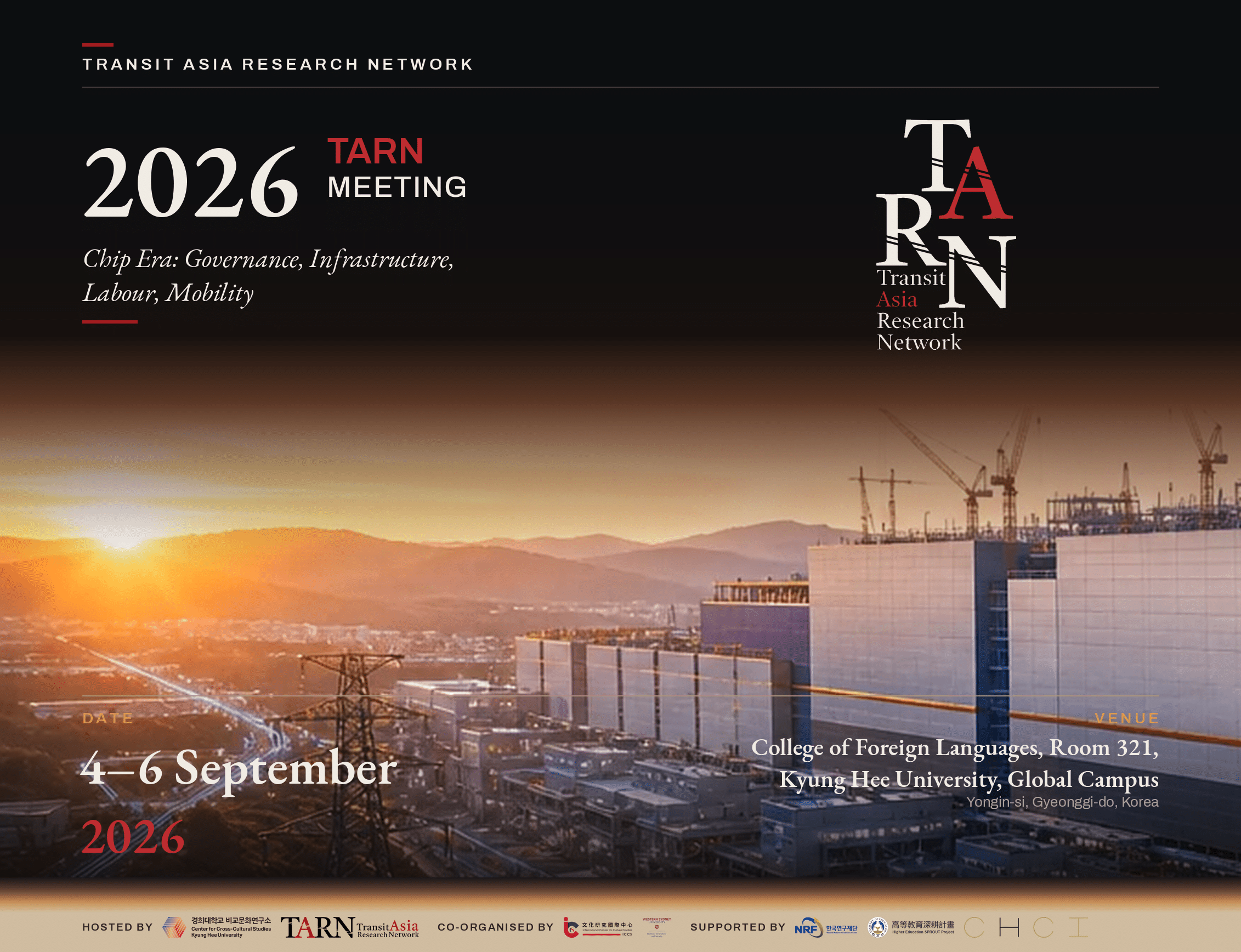
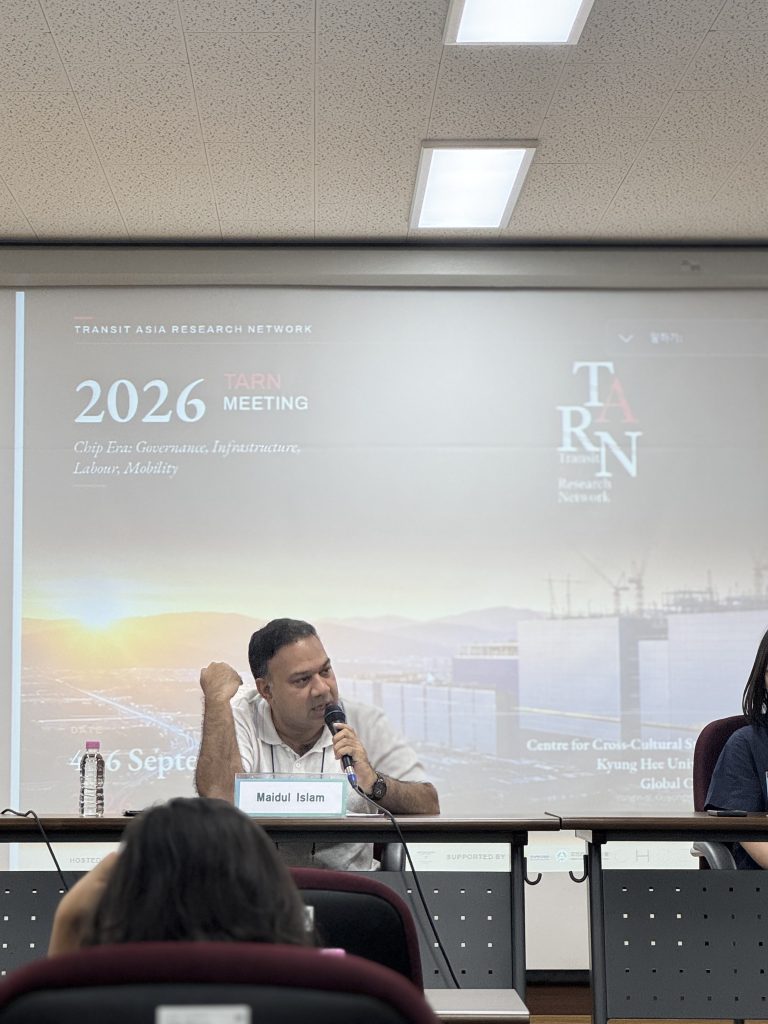
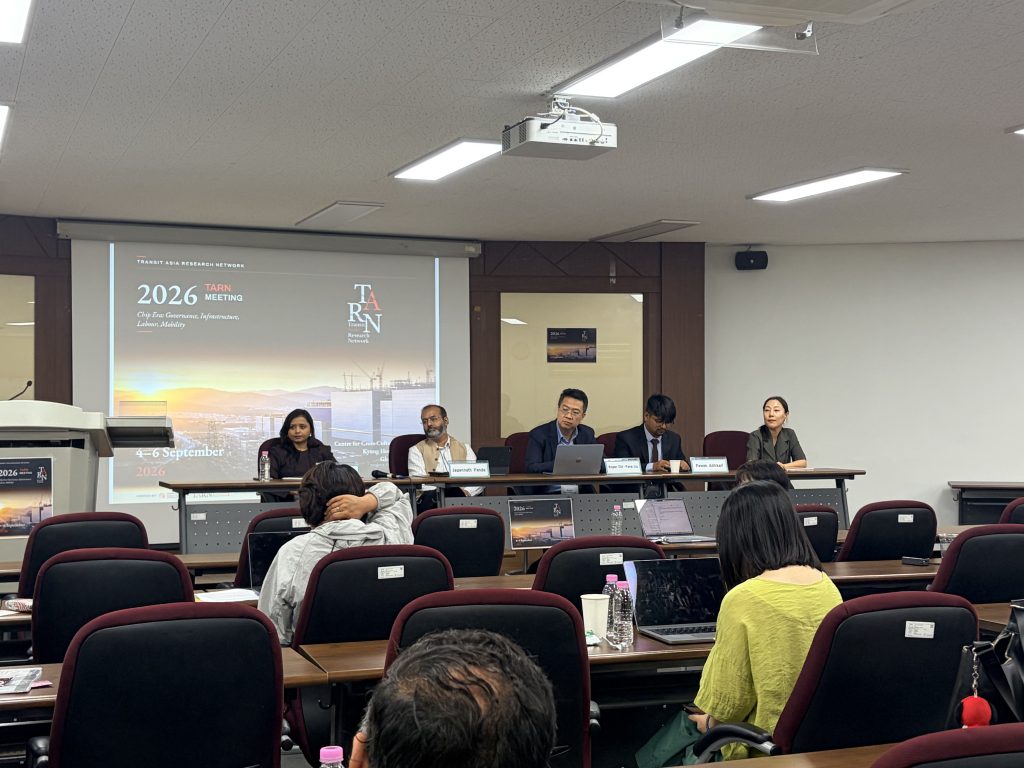
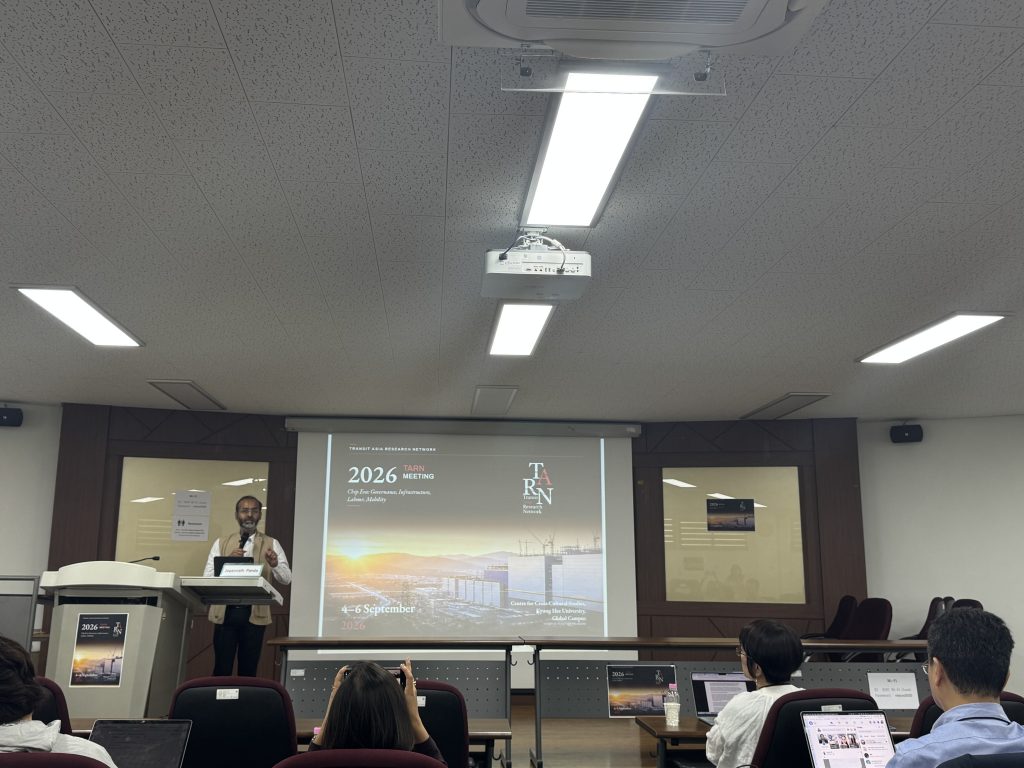
The 2026 TARN Meeting: Chip Era will be held from 4 to 6 September 2026 at the Global Campus, Kyung Hee University, Korea. Jointly organised by the Transit Asia Research Network (TARN), the Centre for Cross-Cultural Studies (CCCS), Kyung Hee University, and the International Center for Cultural Studies, National Yang Ming Chiao Tung University, the Meeting is conceived as a mid-term sharing and commenting session for a collaborative two-volume book project examining how semiconductors, as the foundation of digital infrastructures, are reshaping geopolitics, governance, labour, and capital in the twenty-first century.
Participants will present the progress of their respective chapters, with the collective aim of submitting full manuscripts by the end of 2026. The project comprises two volumes published under the Routledge Studies on Think Asia series.
The Book Project
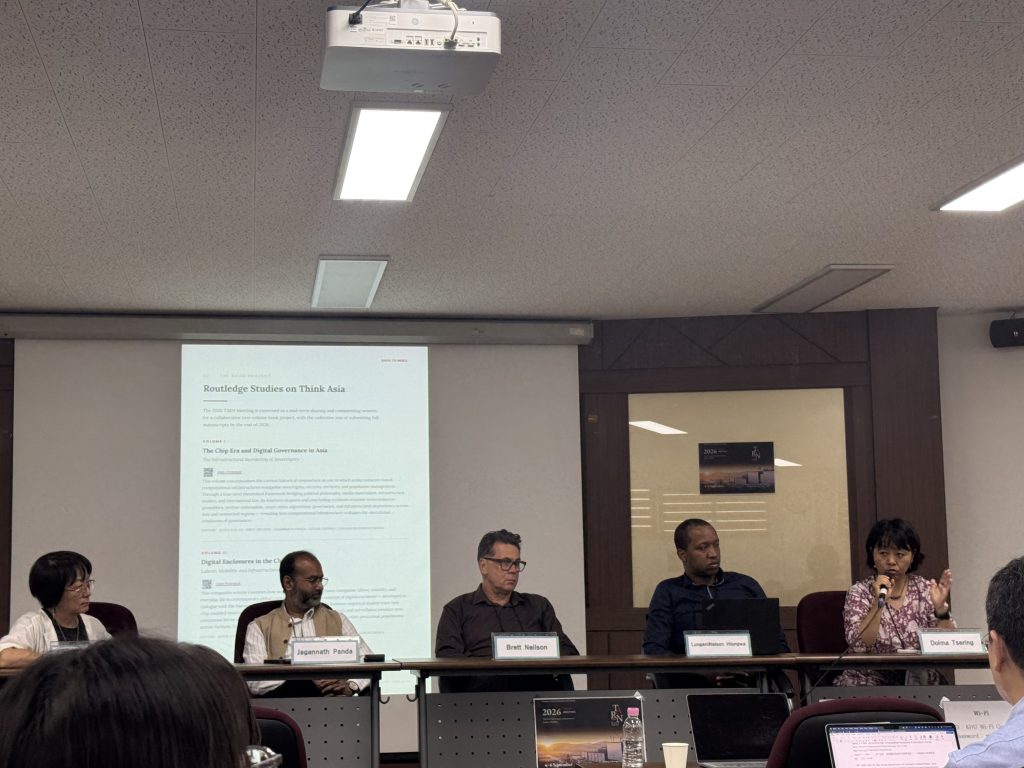
The 2026 TARN Meeting is convened as a mid-term sharing and commenting session for a collaborative two-volume book project, with the collective aim of submitting full manuscripts by the end of 2026.
The Chip Era and Digital Governance in Asia
The Infrastructural Reordering of Sovereignty
This volume conceptualises the current historical conjuncture as one in which semiconductor-based computational infrastructures reorganise sovereignty, security, territory, and population management. Through a four-level theoretical framework bridging political philosophy, media materialism, infrastructure studies, and international law, its fourteen chapters and concluding synthesis examine semiconductor geopolitics, techno-nationalism, smart cities, algorithmic governance, and infrastructural dependency across Asia and connected regions — revealing how computational infrastructure reshapes the operational conditions of governance.
Editors: Joyce C. H. Liu · Brett Neilson · Jagannath Panda · Dolma Tsering · Lungani Nelson Hlongwa
Digital Enclosures in the Chip Era
Labour, Mobility, and Infrastructural Precarity
This companion volume examines how semiconductor infrastructures reorganise labour, mobility, and everyday life in contemporary global capitalism. Centred on the concept of digital enclosure — developed in dialogue with the Marxist tradition of primitive accumulation — its fourteen empirical studies trace how chip-enabled systems of biometric identification, algorithmic management, and surveillance produce new, continuous forms of enclosure for migrants, refugees, platform workers, and other precarious populations across Vietnam, Taiwan, Hong Kong, India, Poland, Germany, and beyond.
Editors: Joyce C. H. Liu · Brett Neilson · Jagannath Panda · Dolma Tsering · Lungani Nelson Hlongwa
Full Programme
Opening Remarks
Joyce C. H. Liu — Professor/Director, ICCS, NYCU, Taiwan · Alex Taek-Gwang Lee — Professor/Director, CCCS, Kyung Hee University, Korea
Editorial Progress Report — Series Editorial Board
Joyce C. H. Liu · Brett Neilson · Jagannath Panda · Dolma Tsering · Lungani Nelson Hlongwa
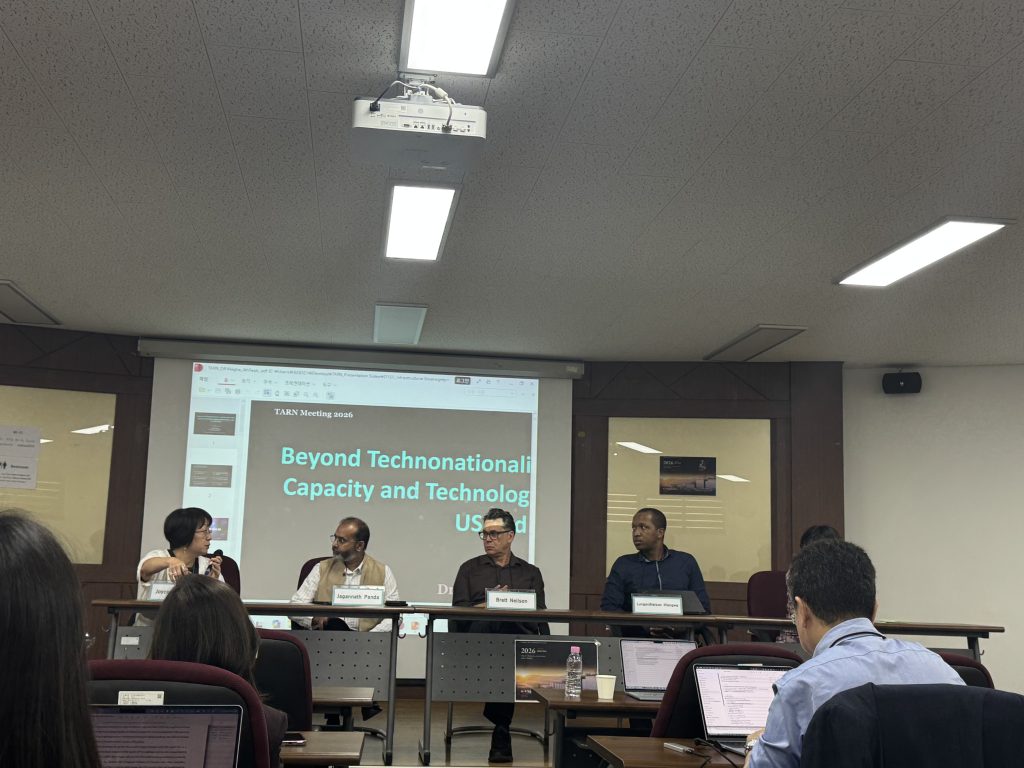
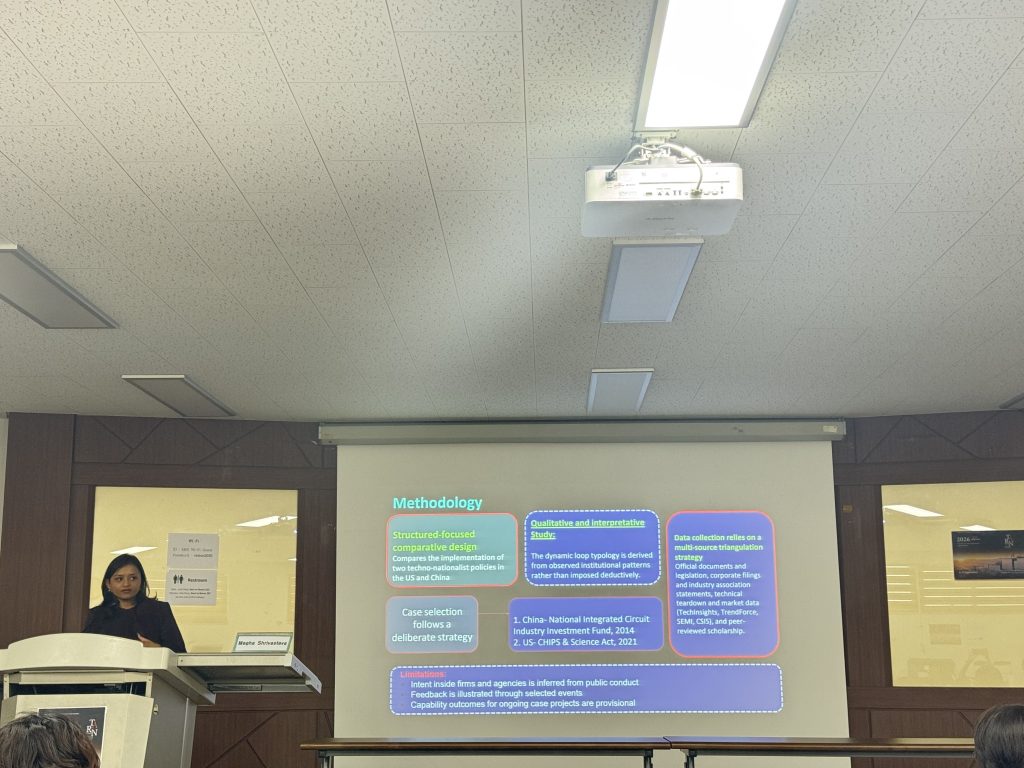
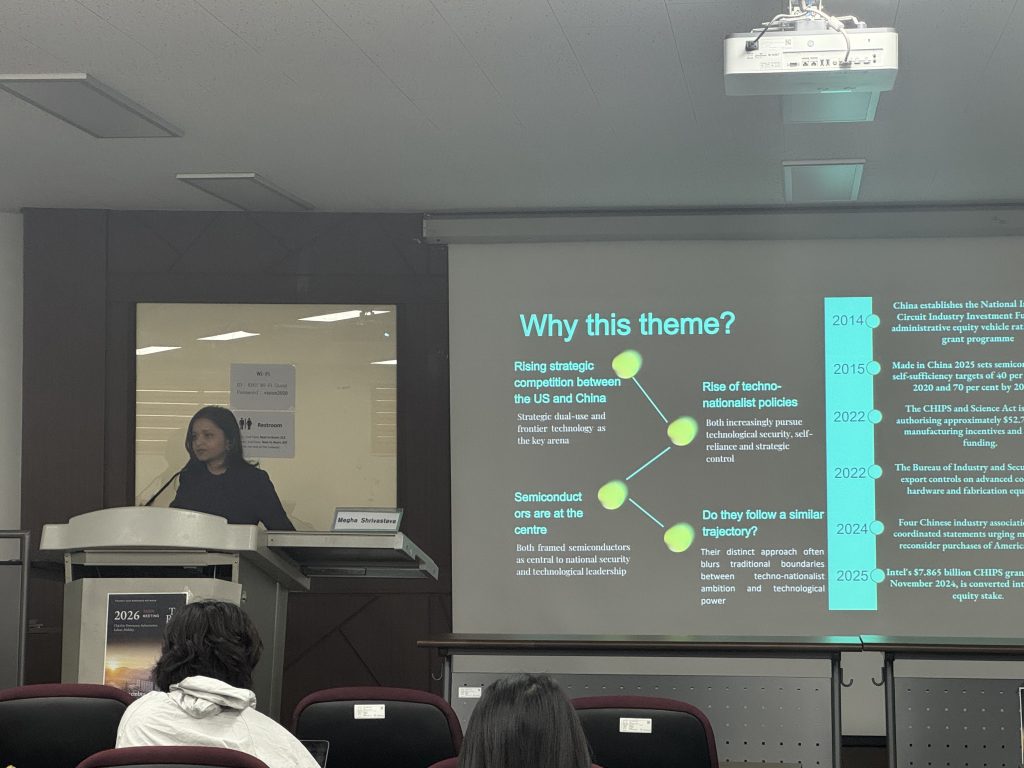
Beyond Techno-Nationalism: Comparative State Capacity and Technological Power in the United States and China
Megha Shrivastava — Assistant Professor, RV University, India
India and the Semiconductor Era: Shaping the Future of the Indo-Pacific Chip Order
Jagannath Panda — Professor/Head, SCSA-IPA, ISDP, Sweden
Techno-Territoriality without Recognition: Semiconductor Power and India–Taiwan Engagement
Roger Chi-Feng Liu — Assistant Professor, IMAPA, National Sun Yat-sen University, Taiwan
Restructuring Transnational Citizen Governance: The Role of Vietnam's National Digital Transformation Strategy and Administrative Reform in the 21st Century
Nguyen Thi Trang (online) — Lecturer, Thai Nguyen University of Education, Vietnam
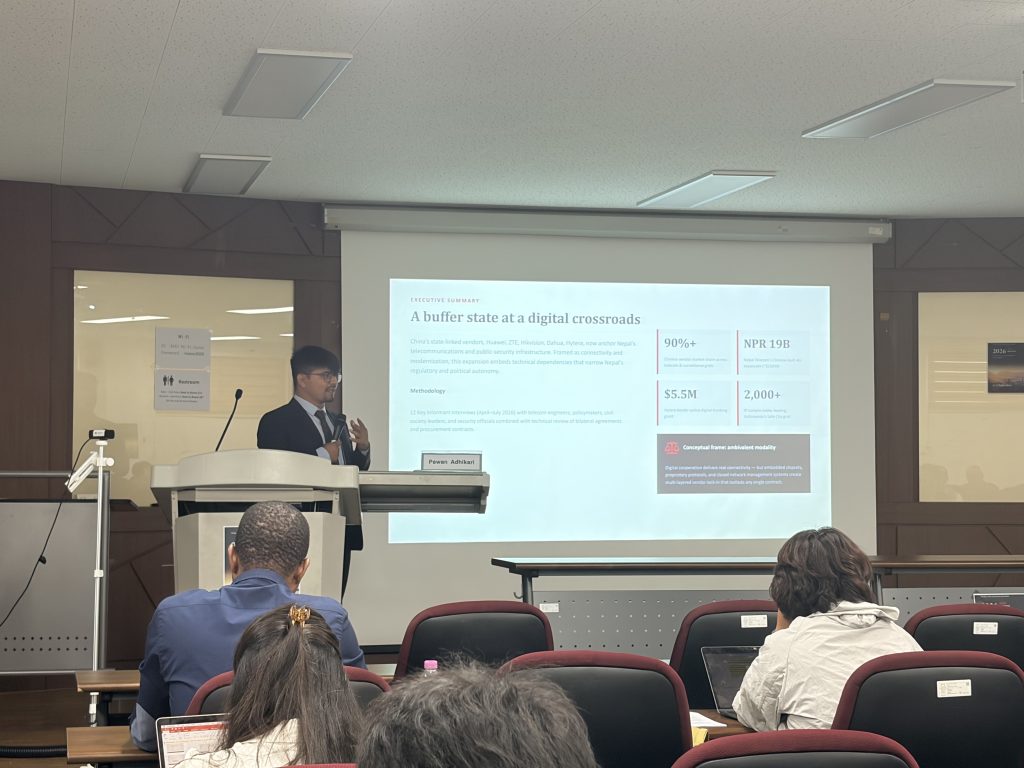
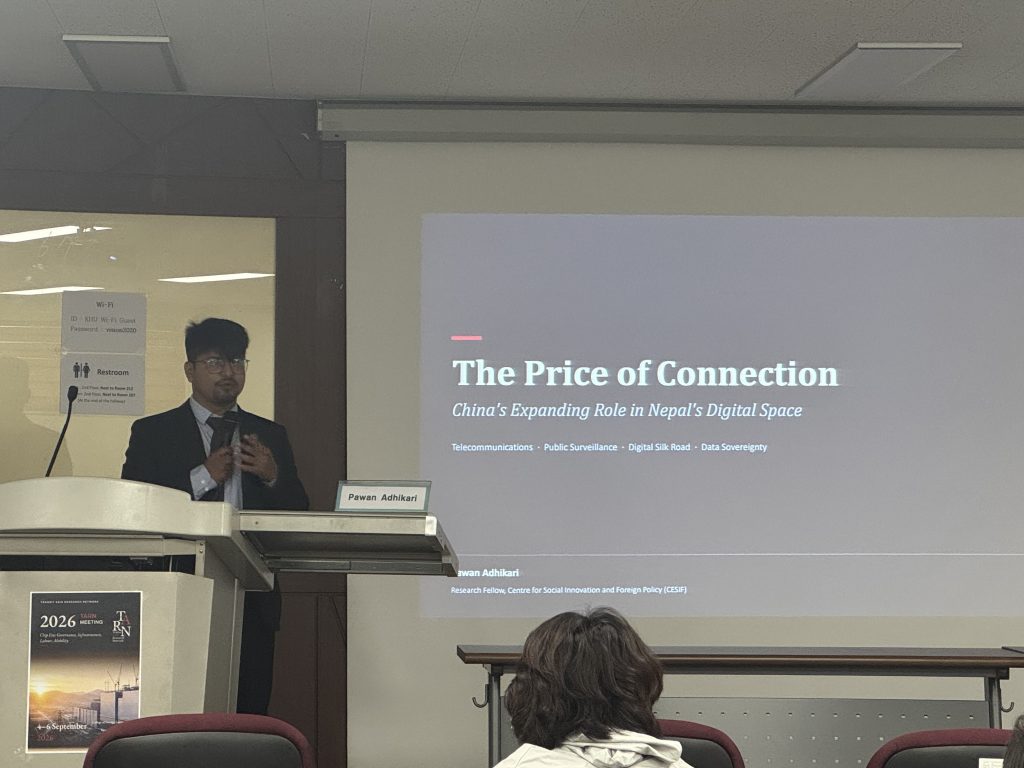
The Price of Connection: China's Expanding Role in Nepal's Digital Space
Pawan Adhikari — Research Fellow, CESIF, Nepal
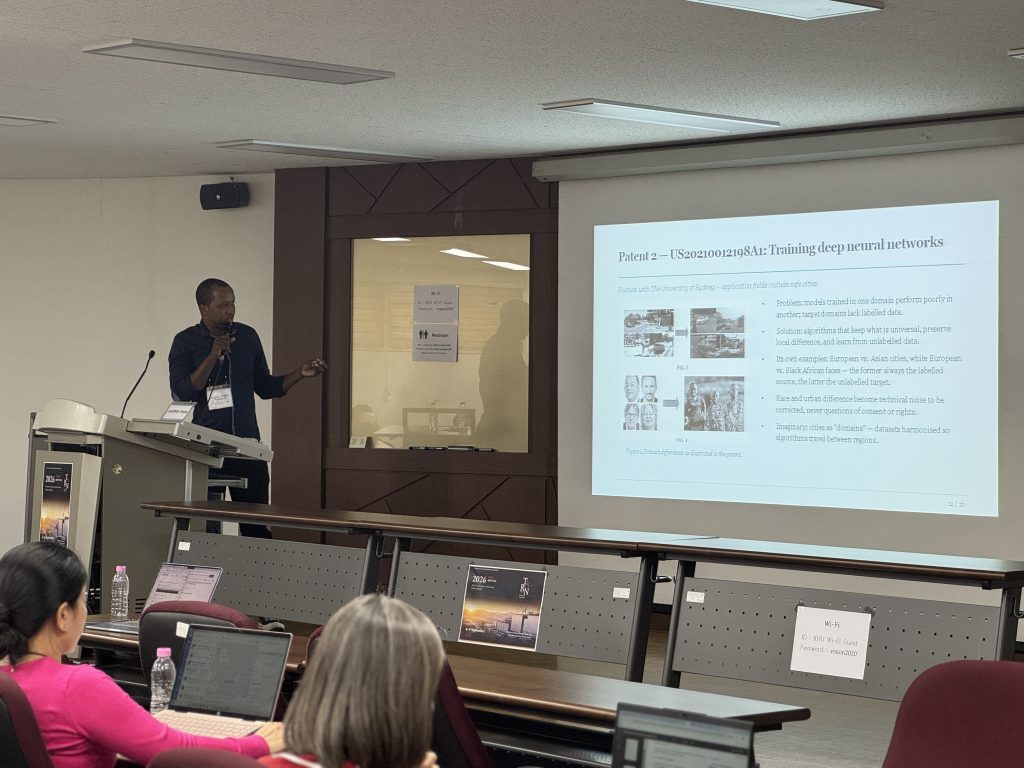
The Safe City as an Algorithmic Formation: Corporate Imaginaries and the Reordering of Urban Governance in Africa
Lungani Nelson Hlongwa — Postdoctoral Fellow, ICCS, NYCU, Taiwan
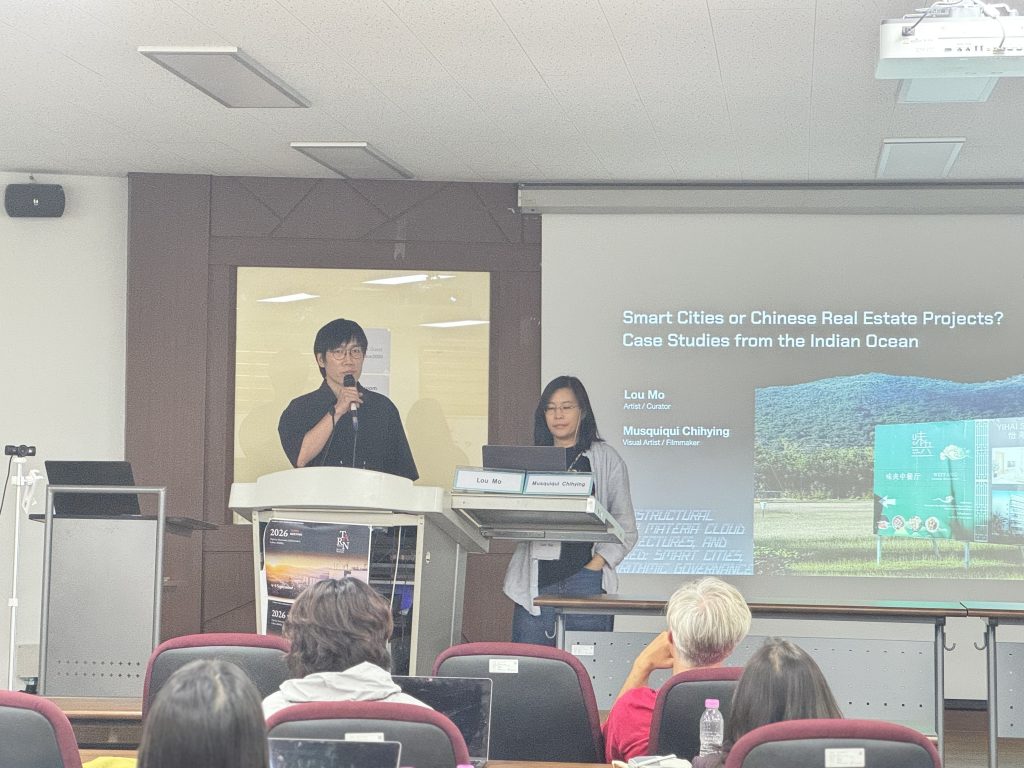
Smart Cities or Chinese Real Estate Projects? Case Studies from the Indian Ocean
Lou Mo — Artist/Curator · Musquiqui Chihying — Visual Artist/Filmmaker
Digital Information Manipulation and Central and Eastern Europe at the Centre of International Digital Expansion
Katarzyna Szpargała (online) — PhD, SRCS, NYCU, Taiwan
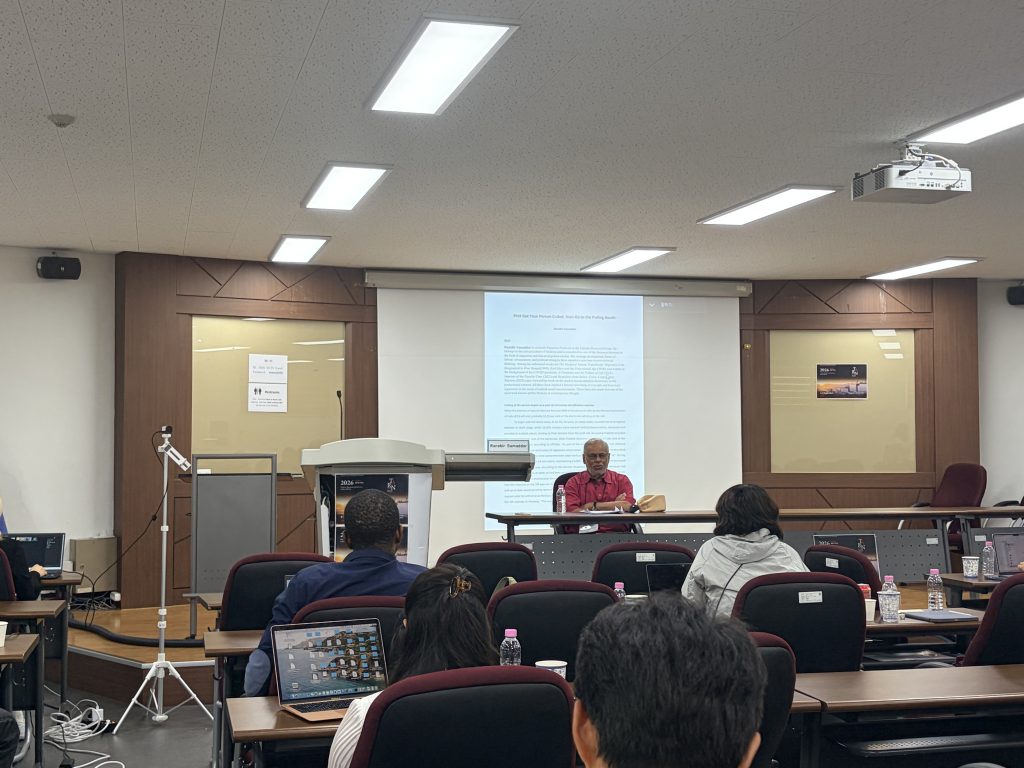
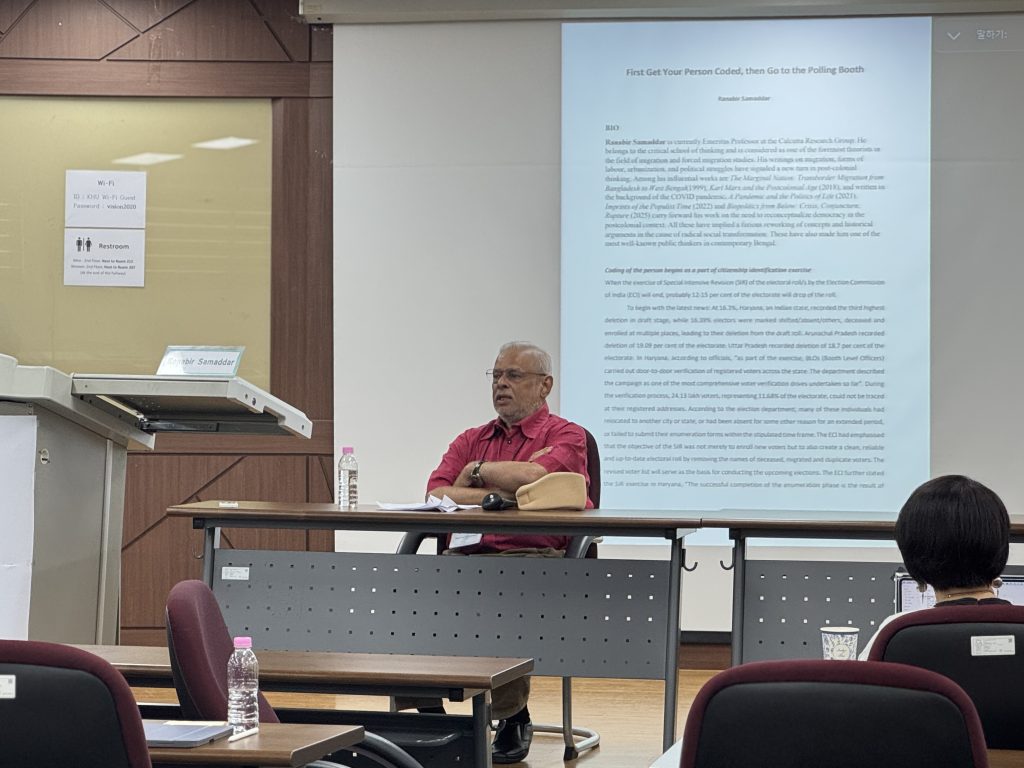
First Get Your Person Coded, then Go to the Polling Booth
Ranabir Samaddar — Emeritus Professor, Calcutta Research Group, India
Codifying the Labouring Body
Sabyasachi Basu Ray Chaudhury (online) — Professor/Head, Department of Political Science, Rabindra Bharati University, India
Biometric Governance and the Securitisation of Rohingya Refugees in India
Monika Verma (online) — MSCA-CZ Postdoctoral Fellow, Myanmar Studies Center, Palacký University in Olomouc, Czech Republic
Data Bodies at the Border: Multiscalar Surveillance and Labour Migration in the China–Myanmar Borderlands
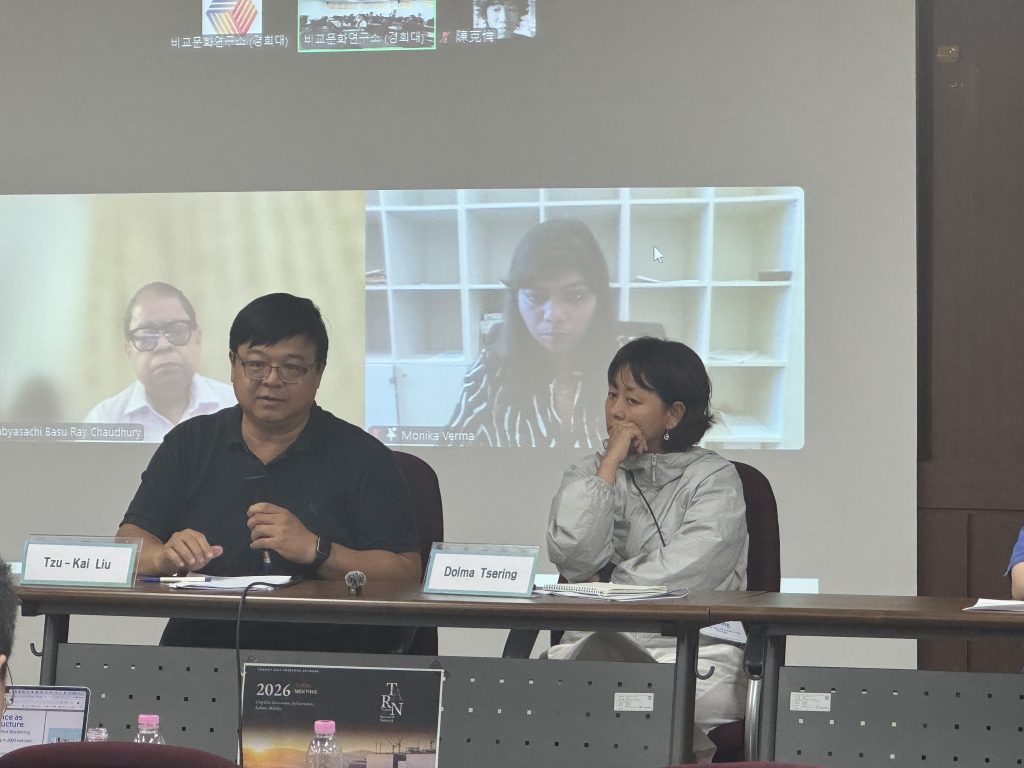
Tzu-kai Liu — Assistant Professor, Department of Ethnology, National Chengchi University
Enclosing the Living Commons: Digital Surveillance, Immobilized Bodies, and China's Containment of Tibetan Culture and Political Resistance
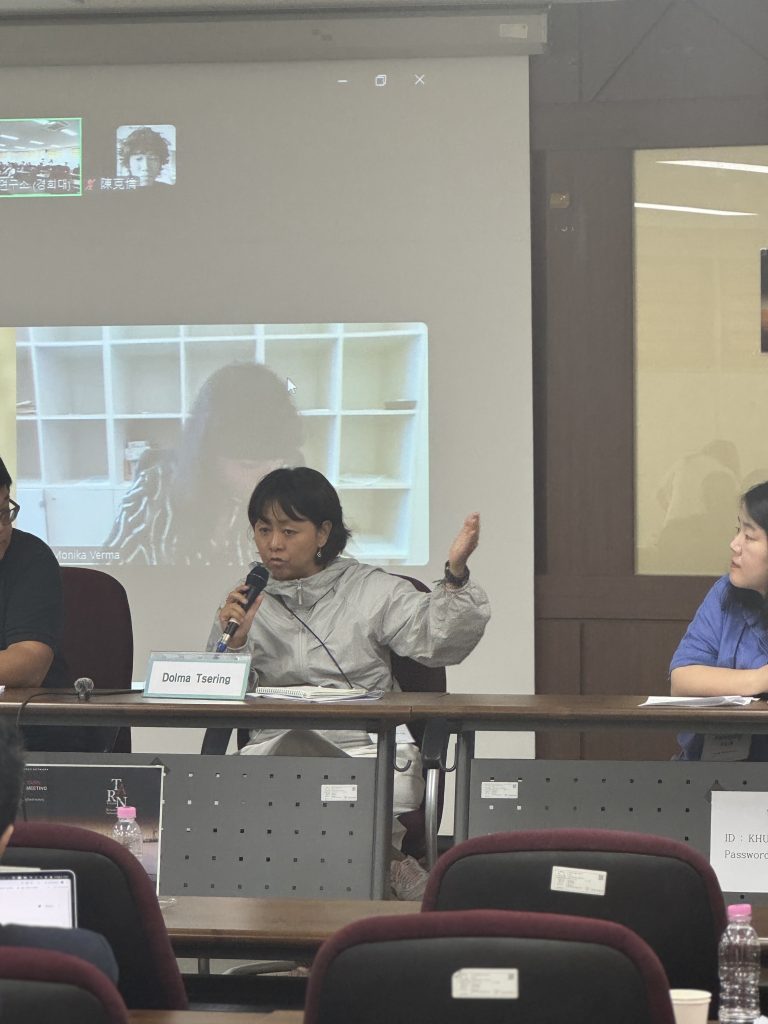
Dolma Tsering — Postdoctoral Fellow, ICCS, NYCU, Taiwan
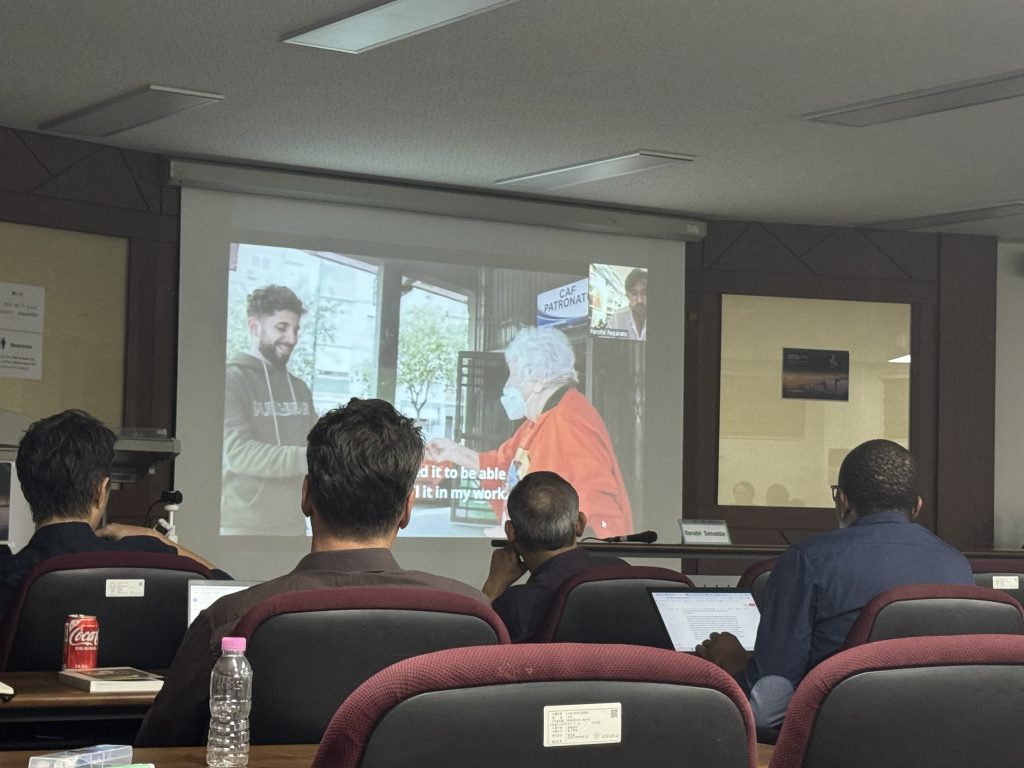
Antropica Projects: Silicon Wounds / Ecomuseum
Parsifal Reparato (online) — Freelance Journalist/Filmmaker
Forum — City as the Southern Question
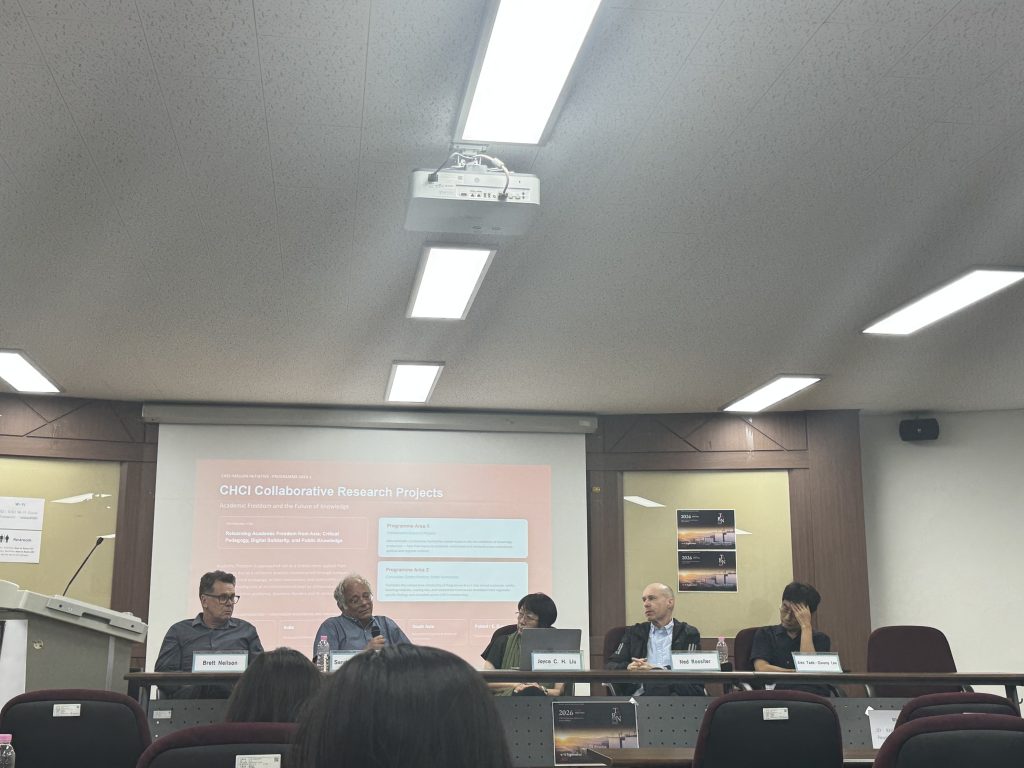
Ranabir Samaddar · Sandro Mezzadra — Professor, University of Bologna · Joyce C. H. Liu · Brett Neilson · Ned Rossiter — Professor, ICS, WSU, Australia
General Discussion — After-Hours Mixer
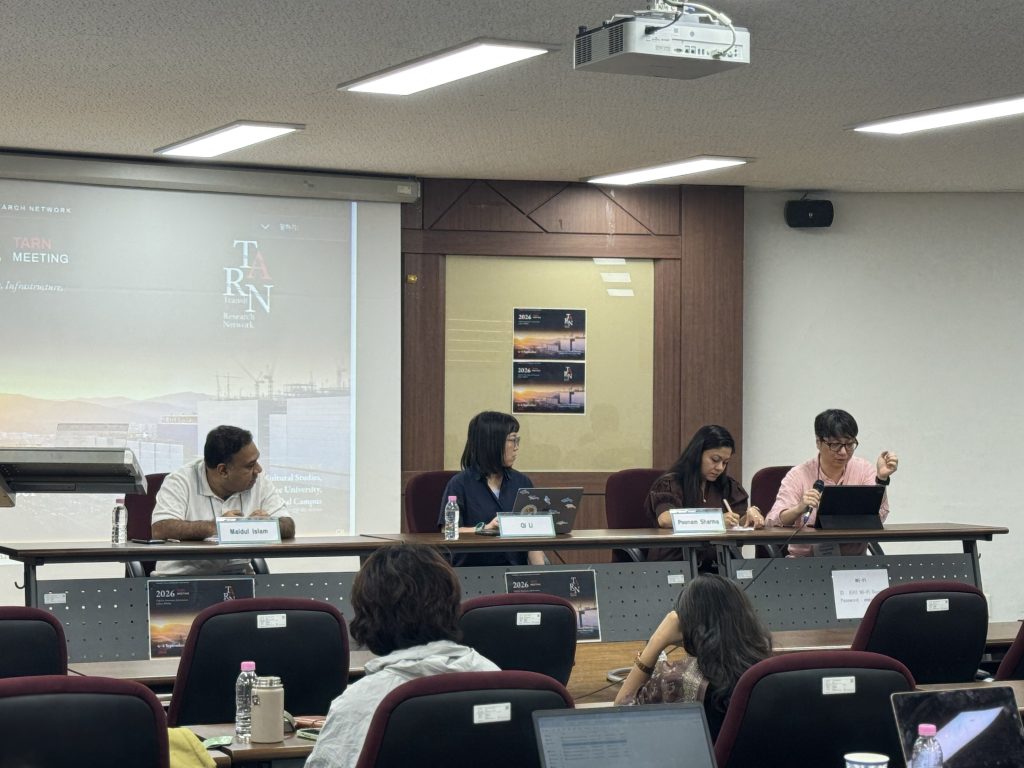
Geopolitics of the Semiconductor Industry and Rare Earth Mining in India
Maidul Islam — Professor, Centre for Studies in Social Sciences, India
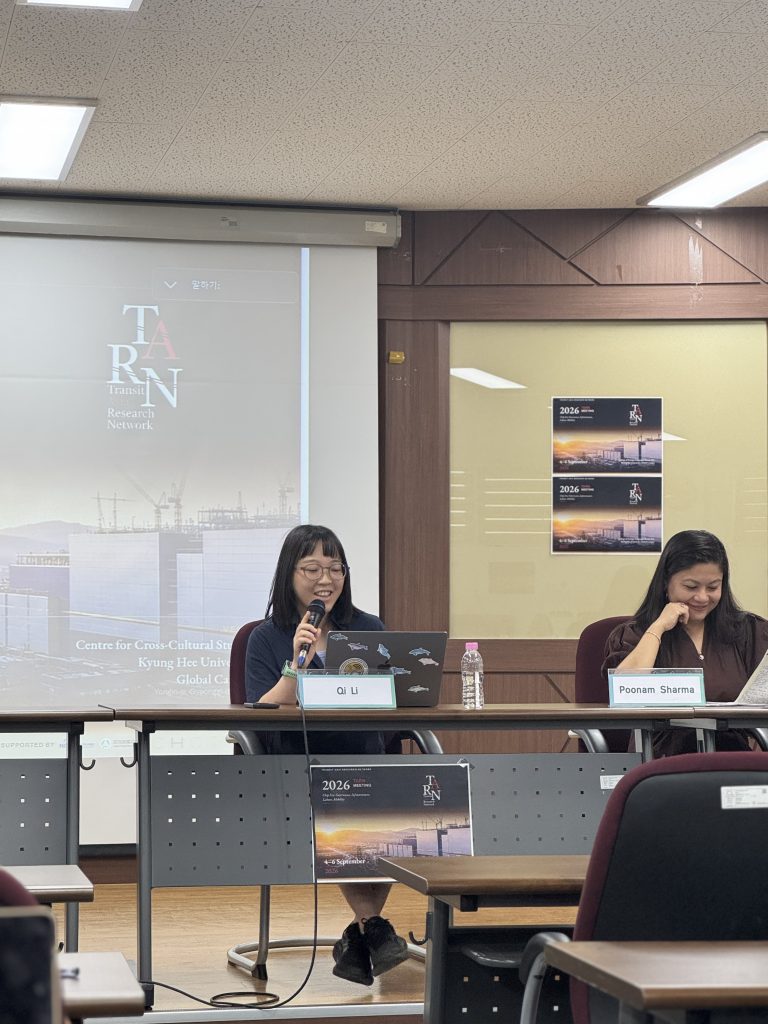
Dispossession and Speculative Future in Taipei's Technopolis
Qi Li — PhD Candidate, ICCS, NYCU, Taiwan
The Labor Conditions of Skilled Migrant Workers in Taiwan's Silicon Valley
Poonam Sharma — PhD, SRCS, NYCU, Taiwan
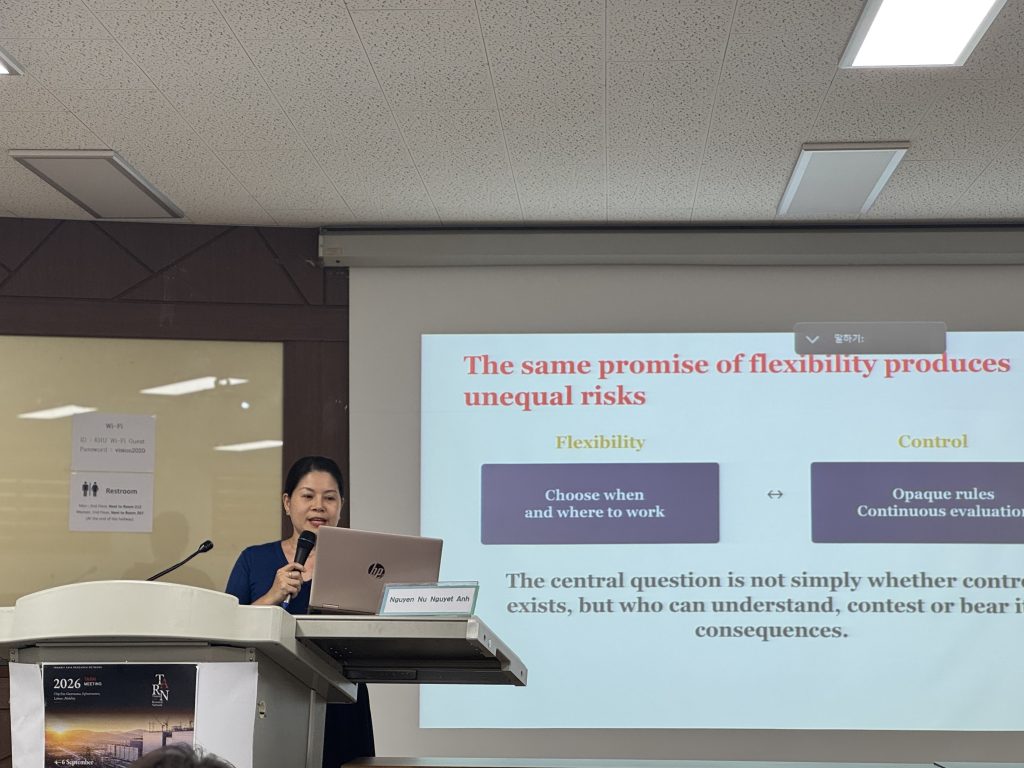
Uniform Algorithms, Intersectional Precarity: The Matrix of Platform Labour Control in Vietnam
Nguyen Nu Nguyet Anh — Professor/Vice Dean, Faculty of Social Work, Anthropology, and Sociology, USSH, VNU-HCM, Vietnam · Nguyen Thi Thanh Binh — PhD Student, Faculty of Social Work, Anthropology, and Sociology, USSH, VNU-HCM, Vietnam
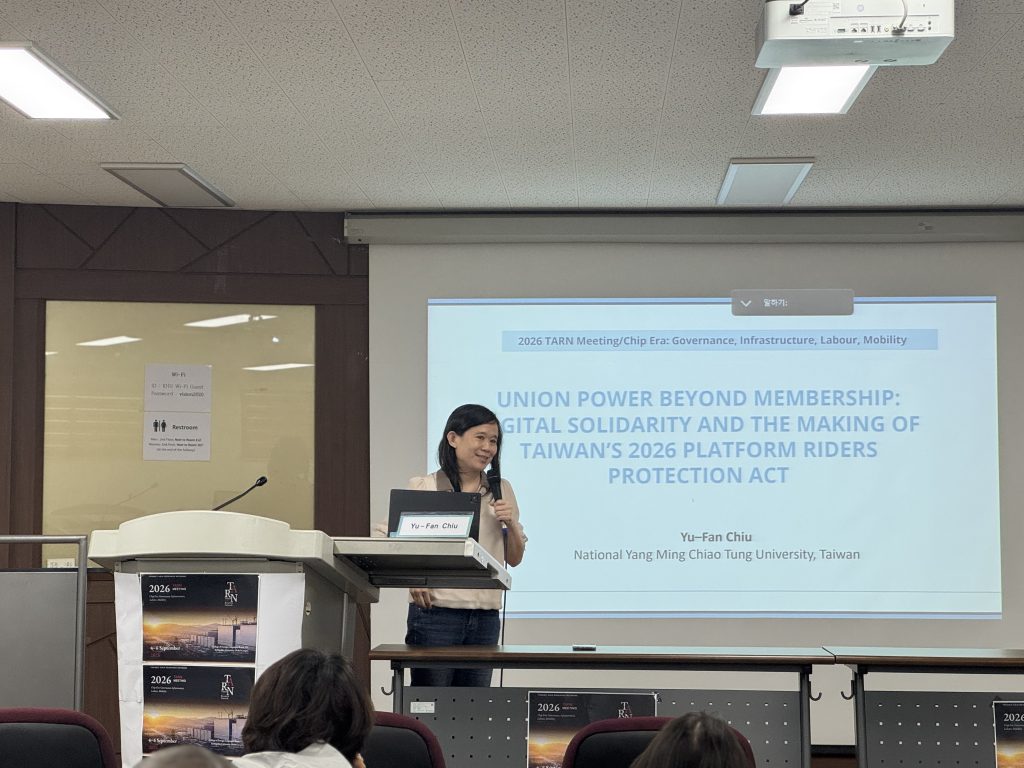
Intersection or Divergence of Labour and Social Protection for Solidarity? An Analysis of the Role of Platform Riders' Unions in Taiwan
Yu-Fan Chiu — Professor, School of Law, NYCU, Taiwan
The Agencies and Solidarities of 'Liminality': Migrant Gig Workers' Tactical Resistance in Hong Kong
Lisa Yuk-ming Leung — Associate Professor, Department of Cultural Studies, Lingnan University, Hong Kong
Platform Power in Motion: Platform Enclosure and Delivery Riders' Organising Capacity in Hong Kong and Taiwan
Ngai Keung Chan — Assistant Professor, School of Journalism and Communication, The Chinese University of Hong Kong
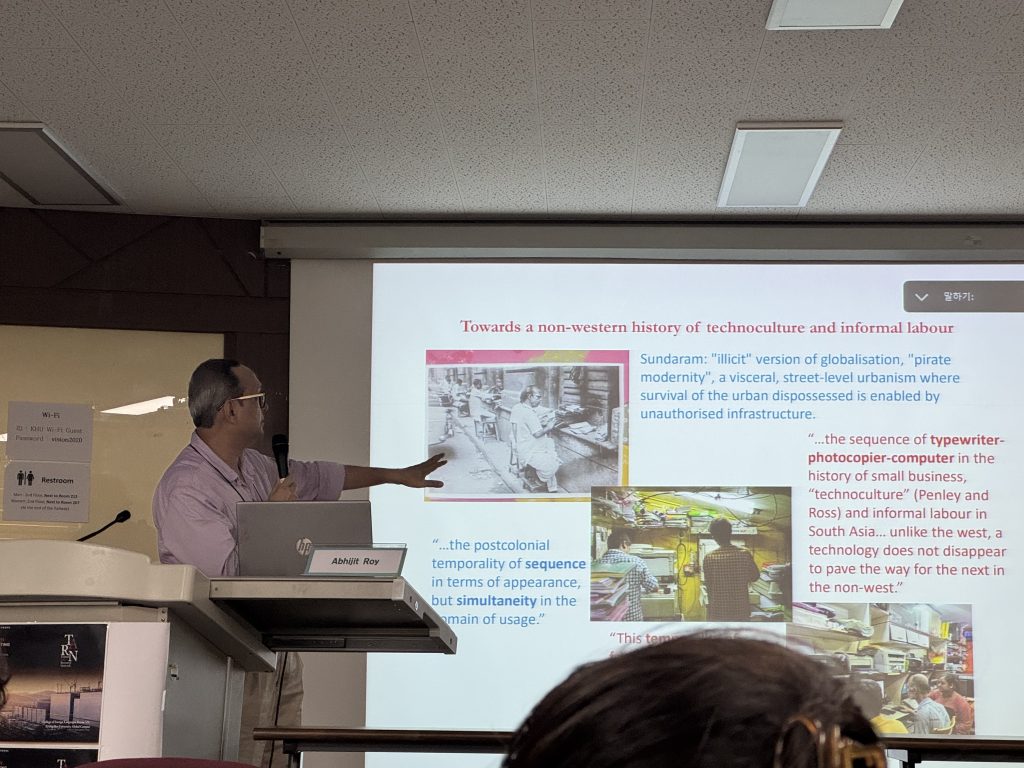
Against Obsolescence: Low-End Digital Work, Labour and Livelihood in a South Asian City
Abhijit Roy — Professor, Jadavpur University / Chair, CRPCS, India
Platform Architecture and the Contestation of Southeast Asian Migrant Stigmatization in Taiwan
Rafal Smoczynski (online) — Associate Professor, Institute of Philosophy and Sociology of the Polish Academy of Sciences
Periodizing the Chip Age in the Multiple Times of the Present
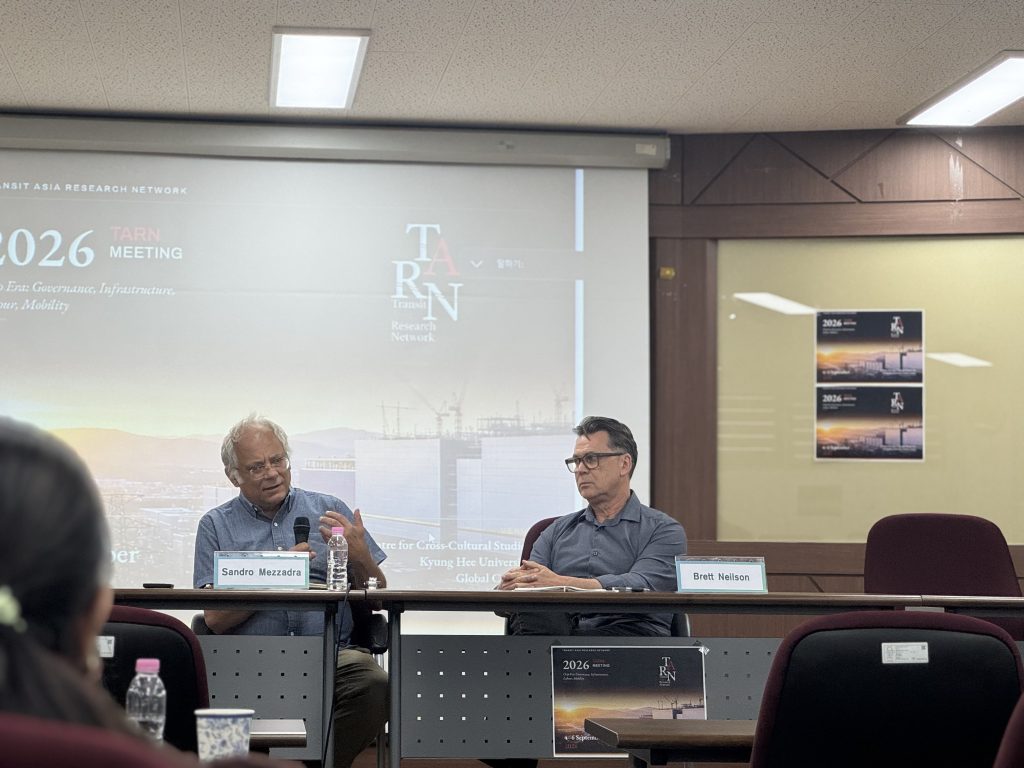
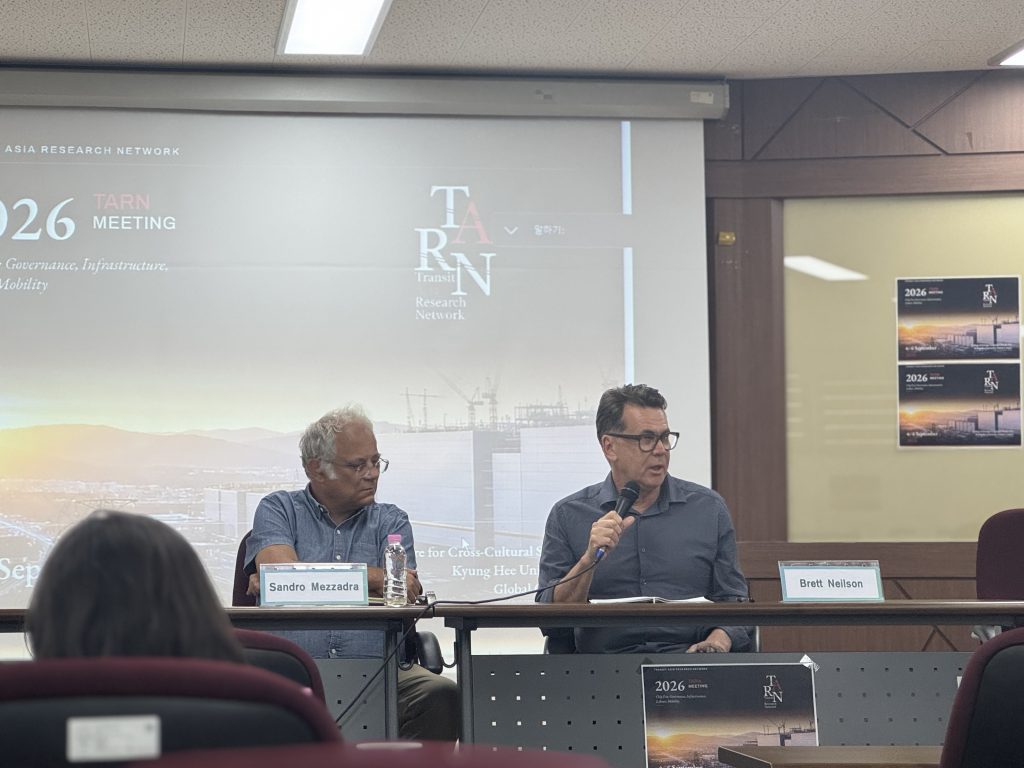
Brett Neilson — Professor, ICS, WSU, Australia · Sandro Mezzadra — Professor, University of Bologna
Silicon Security, Permanent War, and the Logistical Episteme
Ned Rossiter — Professor, ICS, WSU, Australia
Technoscientific Ideology and the Chip Wars: The Political Economy of Planetary Extraction
Alex Taek-Gwang Lee — Professor/Director, CCCS, Kyung Hee University, Korea
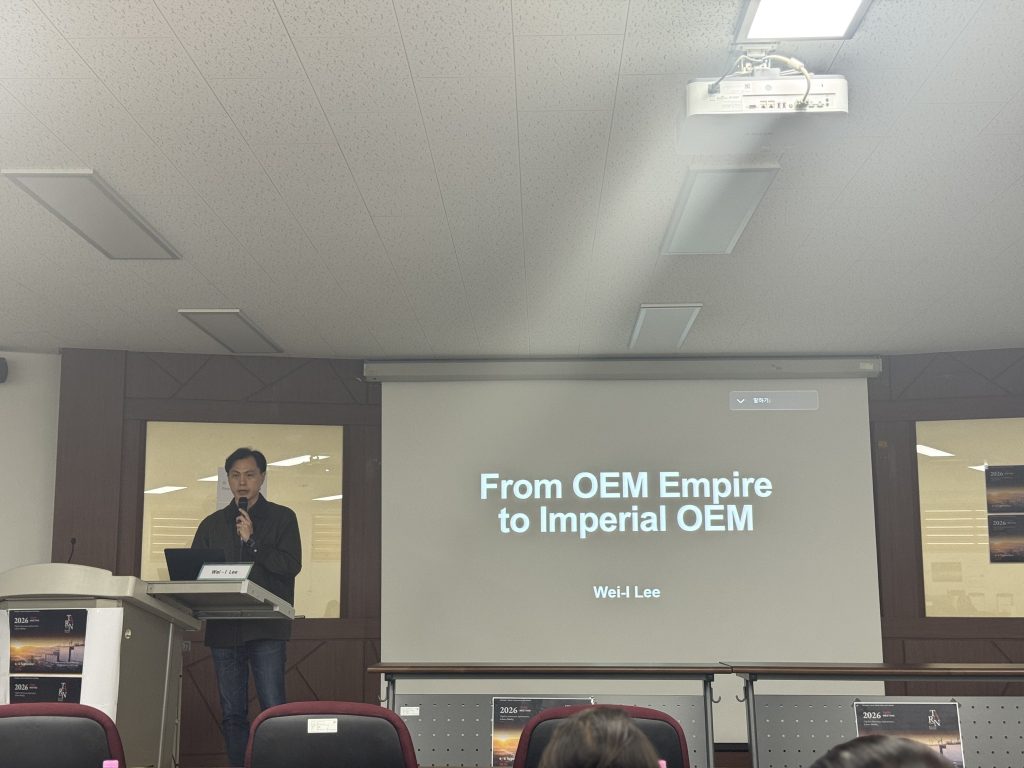
From OEM Empire to Imperial OEM
Wei-I Lee — Chief Editor, Voices of Photography, Taiwan
The Temptation of Legibility in the Chip Era: Homotopic Authoritarianism and Digital Tianxia
Joyce C. H. Liu — Professor/Director, ICCS, NYCU, Taiwan
TARN Progress Report
Ko-Lun Chen — Postdoctoral Fellow/TARN PM, ICCS, NYCU, Taiwan
Discussion and Decisions — TARN Future Project Proposals; CHCI Collaborative Research Projects: Academic Freedom and the Future of Knowledge
Speakers & Contributors
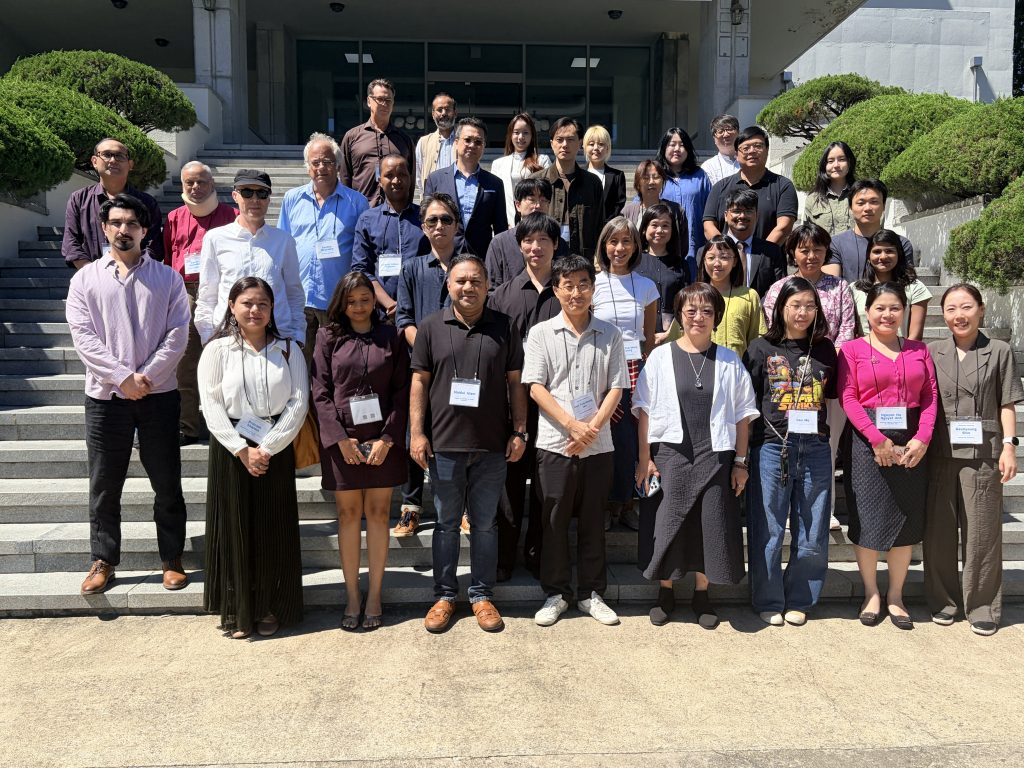
32 participants presenting at the 2026 TARN Meeting. Tap a name to read their full bio.

Abhijit Roy is Professor of Film Studies at Jadavpur University and founder Chair of the Centre for Research in Policy, Communication and Society (CRPCS), Kolkata. He serves on the editorial boards of Studies in South Asian Film and Media, Journal of the Moving Image, and International Journal of Politics and Media, and has received visiting fellowships from Maison des Sciences de l'Homme (Paris, 2006), the Indian Institute of Advanced Study (Shimla, 2009), the University of Oregon (2017), and Fu Jen Catholic University (Taipei, 2019). He has co-edited Channeling Cultures: Television Studies from India (OUP, 2014) and authored a book on Sergei Eisenstein (Papyrus, 2004). His current research focuses on digital labour and everyday technoculture in India.

Alex Taek-Gwang Lee is a professor of philosophy and cultural studies and director of the Centre for Cross-Cultural Studies and the Global Centre for Technology in Humanities at Kyung Hee University, South Korea. He has held positions as a guest researcher at the Institute of Philosophy of the Czech Academy of Sciences and as a visiting professor at the Centre for Applied Philosophy, Politics, and Ethics at the University of Brighton. His scholarly work includes three books published in 2025: Communism After Deleuze, Made in Nowhere: Essays on the Asiatic Modes of Existence, and Colors of the Concepts.

Brett Neilson is Professor and Deputy Director at the Institute for Culture and Society, Western Sydney University. With Sandro Mezzadra, he is author of Border as Method, or, the Multiplication of Labor (Duke 2013), The Politics of Operations: Excavating Contemporary Capitalism (Duke 2019) and The Rest and the West: Capital and Power in a Multipolar World (Verso 2024). Over the past twenty years, he has led five projects on global labor, logistics, digital culture and changing geopolitical dynamics for the Australian Research Council's Discovery Award scheme, most recently “Transborder Electricity Grids and Geopolitics.”

Dolma Tsering is a postdoctoral fellow in the Department of Humanities and Social Sciences at National Yang Ming Chiao Tung University, supported by an NSTC (National Science and Technology Council) fellowship, and a research fellow at the International Center for Cultural Studies (ICCS). She received her Ph.D. from Jawaharlal Nehru University, India. Her research on stateless Tibetans has been published in Asian Ethnicity, Asian Affairs, East Asia Forum, Taiwan Journal of Democracy, and Taiwan Insight. Prior to her postdoctoral work, she worked with the National Maritime Foundation and the Manohar Parrikar Institute for Defence Studies and Analyses (MP-IDSA) in India.
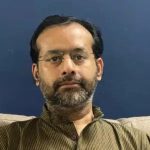
Jagannath Panda is the Head of the Stockholm Center for South Asian and Indo-Pacific Affairs (SCSA-IPA) at the Institute for Security and Development Policy (ISDP), Sweden, and a Senior Fellow at The Hague Center for Strategic Studies in the Netherlands. As a senior expert on East Asia and Indo-Pacific affairs, he has testified to the US-China Economic and Security Review Commission at the US Congress on 'China and South Asia'. He is the Series Editor for Routledge Studies on Think Asia, and has been named one of the Strategic Affairs Thinkers of the Next Decade by The Print and one of the top experts in Global Affairs and Diplomacy from Sweden by Petelgo.

Jasmin Dall'Agnola is a Senior Research and Teaching Associate at the Department of Communication and Media Research, University of Zurich. Her research sits at the intersection of political science, surveillance, and science and technology studies, examining how Internet and smart city technologies reshape state-citizen relations in democratic and authoritarian contexts. Her work has been published in Swiss Political Science Review, Dialogues on Digital Society, Surveillance & Society, and Journal of Illiberalism Studies. Her forthcoming book, Smart Cities and Authoritarian Control in Central Asia (Bristol University Press), offers an in-depth ethnographic account of how these technologies reshape state power and citizen agency.

Joyce C. H. Liu is Professor of Cultural Studies, Critical Theory, and Political Philosophy, and Director of the International Center for Cultural Studies at National Yang Ming Chiao Tung University. Her research spans comparative literature, psychoanalysis, visual culture, and Chinese political thought, with recent work focusing on geopolitics, biopolitics, border regimes, internal colonialism, unequal citizenship, the decolonization of knowledge, and art-based political interventions. The author of eight monographs, twelve edited volumes, and over one hundred scholarly articles, Liu is widely known for her landmark analyses of the topology of mentalities across the Taiwan–China complex. She also leads major transnational research projects on migration, justice, and decolonial knowledge.

Katarzyna Szpargała is a Ph.D. graduate from the Institute of Social Research and Cultural Studies, National Yang Ming Chiao Tung University. Her research focuses on gendered and identity-based disinformation and its effects on the social and cultural environment in Central and Eastern Europe. An ongoing project connected to this research is the webinar “Digital Deception: Surveillance Technologies and Information Manipulation,” planned for January 2026.

Leung Yuk-ming, Lisa is an associate professor at the Department of Cultural Studies, Lingnan University Hong Kong. She has researched and published extensively in the area of transnational media circulation, with a recent focus on minority, migration, and race. She is co-author of Understanding South Asian Minorities in Hong Kong (HKU Press, 2014) and author of Ethnic Minorities, Media and Participation: Creative Belonging in Hong Kong (Routledge, 2021). Her latest research explores the added precarities facing racial minority workers in the age of digitized capitalism.

Lou Mo is a Chinese Canadian artist and curator living and working in Taipei and France. She graduated from the École des hautes études en sciences sociales in Paris with a degree in Asian Studies. Her research focuses on modern and contemporary Afro-Asian connections and Third World artists' creative practices, with interests in diaspora, identity, and post-colonial history.

Lungani Nelson Hlongwa is Postdoctoral Fellow at the International Centre for Cultural Studies (ICCS) at National Yang Ming Chiao Tung University (NYCU). He is also a research fellow at the Security Institute for Governance and Leadership in Africa (SIGLA), Stellenbosch University. His research examines China–Africa security relations, with a focus on urban surveillance infrastructure and the Digital Silk Road Initiative. His work has been published in peer-reviewed journals, including Work Organisation, Labour and Globalisation and Media, Culture & Society.

Maidul Islam is a Professor of Political Science at the Centre for Studies in Social Sciences, Calcutta. After completing his undergraduate and postgraduate studies in Political Science as a Clarendon-Hector Pilling-Senior Hulme Scholar at Brasenose College, he earned a doctorate from the Department of Politics and International Relations at the University of Oxford. He is the author of Limits of Islamism: Jamaat-e-Islami in Contemporary India and Bangladesh (Cambridge University Press, 2015), Indian Muslim(s) after Liberalization (Oxford University Press, 2019), and Political Theory and South Asian Counter-Narratives (Routledge, 2022). Previously, he taught political science at the Tata Institute of Social Sciences and at Presidency University, Kolkata, and was a Fellow at the Indian Institute of Advanced Study, Shimla.

Manuela Bojadžijev is Professor for “Culture and Lifestyles in the Immigration Society” at BIM/HU Berlin since 2020. Her work focuses on the study of globalised and digital cultures as well as migration in a global perspective. She is interested in the “dispute over migration” in migration societies and how social changes are narrated, lived and contested through modes of representation of migration and flight, and investigates current transformations of mobility, migration, and racism in interplay with digitalisation and logistics, predominantly in urban and geopolitical constellations.

Megha Shrivastava is an Assistant Professor at RV University, Bengaluru, India, and an Affiliate Research Fellow at the International Centre for Cultural Studies, National Yang Ming Chiao Tung University. She is a recipient of the 2025 Taiwan Fellowship (Ministry of Foreign Affairs, Taiwan), the US-India Artificial Intelligence Fellowship (Observer Research Foundation America), and the Network of Advanced Study of China Fellowship (Takshashila Institution). Her research interests include China's ICT policies, US technology policy towards China, great power conflict, and global technology policy.

Monika Verma is an MSCA-CZ postdoctoral fellow at the Myanmar Studies Center, Department of Asian Studies, Palacký University in Olomouc, Czech Republic. She holds a Ph.D. from the Institute of Social Research and Cultural Studies at National Yang Ming Chiao Tung University, Taiwan. Her research on refugees and forced migration in South Asia has been published with Oxford University Press, Routledge, the International Journal of Population Studies, Innovation in the Social Sciences, and Asia Review. Her current postdoctoral project examines the securitization of migration and its effects on Rohingya refugees, drawing on extensive fieldwork in India and Bangladesh.

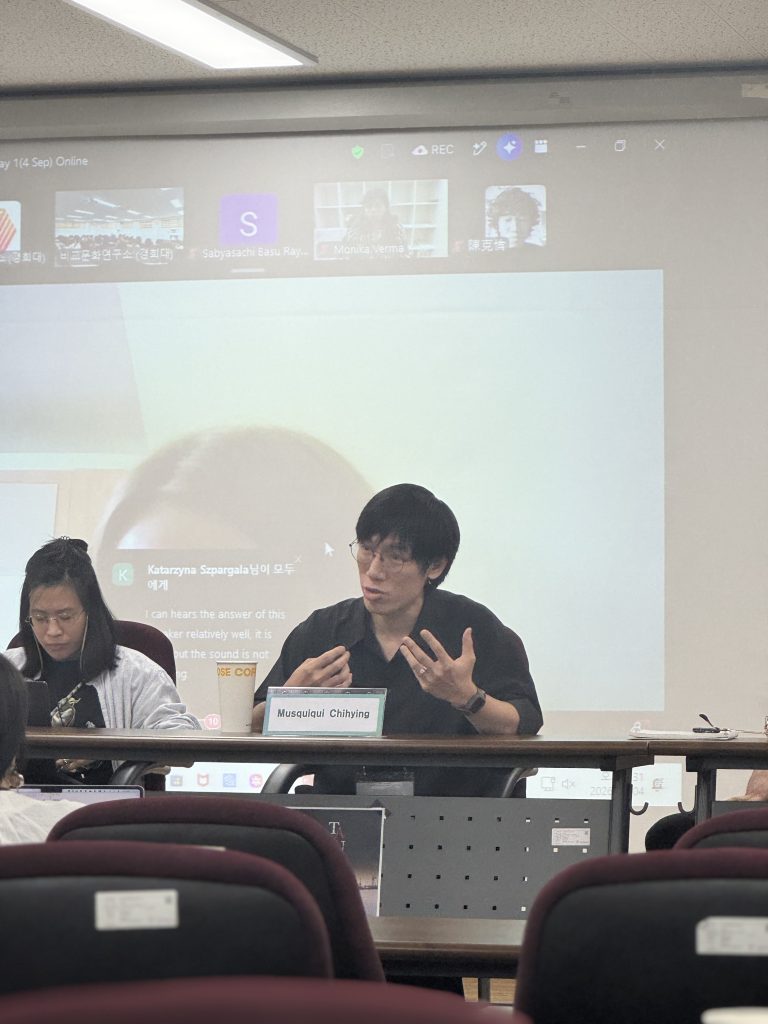
Musquiqui Chihying is a Taiwanese visual artist and filmmaker based in Taipei and Berlin. His work focuses on issues of post- and trans-modernity in the Global South, postcolonial identity, and contemporary technology, employing sound, music, and moving images to construct a narrative vocabulary. Many of his works have explored ethnic and technological exchange between the African, Asian, and Afro-Asian Sea regions.

Ned Rossiter is a media theorist noted for his research on network cultures, the politics of cultural labour, logistical media, data politics, and the geopolitics of critical infrastructures. Ned is Director of Research at the Institute for Culture and Society and Professor of Communication in the School of Arts, Western Sydney University. He is the author of Organized Networks: Media Theory, Creative Labour, New Institutions (2006), Software, Infrastructure, Labor: A Media Theory of Logistical Nightmares (2016), and (with Geert Lovink) Organization after Social Media (2018). Ned is co-author (with Soenke Zehle) of Entropological Materialism: Ordering Disorder in the Cybernetic Century (Fordham University Press, 2027) and is currently writing a follow-up volume, The Logistical Episteme.

Ngai Keung Chan is an Assistant Professor in the School of Journalism and Communication at The Chinese University of Hong Kong. His research, situated at the intersection of communication studies, sociology of work, and Science and Technology Studies, examines the moral economies of labor platforms in East Asia, with emphasis on how gig workers rationalize precarious lives and resist algorithmic control. His work has been published in Big Data & Society, New Media & Society, and Information, Communication & Society.

Nguyen Nu Nguyet Anh is a sociologist and Vice Dean of the Faculty of Social Work, Anthropology, and Sociology at the University of Social Sciences and Humanities, Vietnam National University Ho Chi Minh City. Her research on platform labour, precarity, migration, and digital governance in Southeast Asia spans multiple nationally and internationally funded projects, engaging critically with platformisation and algorithmic management in the context of the chip-enabled digital economy.

Nguyen Thi Trang is a lecturer in the Department of History, Thai Nguyen University of Education. Her research on labour, migration, and colonial governance has been published in Labor History and the Journal of Southeast Asian Studies. She is currently the principal investigator of a Thai Nguyen University-funded project (2025–2027) entitled Governing Colonial Labour Networks in Indochina, while also pursuing research on digital governance, labour migration, and technological infrastructures.

Parsifal Reparato is an anthropologist and journalist who also studied as Director of Photography. For years his work has focused on the socialist and ex-socialist countries now facing the challenges of the global economy — a thread that connects to the Nimble Fingers project, a film about Vietnamese women workers. He is also a freelance journalist collaborating with various reviews; in 2015 his reportage Chikù, on an Italian/Roma restaurant in Naples, was awarded at the Myllennium Award competition.

Pawan Adhikari is a Research Fellow at the Centre for Social Innovation and Foreign Policy (CESIF). He is the author of China in Nepal's Civic Space: Navigating the Dynamics of Chinese NGOs and Soft Power, which examines Chinese non-state engagement in Nepal. He holds a Master's degree in Conflict, Peace, and Development Studies, and his policy-oriented writings contribute to debates on Nepal's foreign policy, China–Nepal relations, and the regional order in South Asia.

Poonam Sharma is a Postdoctoral Fellow at the International Center for Cultural Studies, National Yang Ming Chiao Tung University. Her central research area focuses on the phenomenon of migration of migrants/illegal immigrants as 'unauthorized' vote banks in South Asian nations. Her research also covers contemporary border politics and unequal socio-political policies regulated by modern nation-states, with a broader interest in migration and citizenship politics across India, Malaysia, Thailand, and Singapore.

Qi Li is a doctoral candidate at the Institute of Social Research and Cultural Studies, National Yang Ming Chiao Tung University. She studies land politics and rural-urban relations in the technopolis landscapes of Taipei and Shanghai. She is currently a graduate research fellow at the International Center for Cultural Studies (ICCS-NYCU) and editor-in-chief of the student-led publication Conflict, Justice, Decolonization (CJD).

Rafal Smoczynski is a sociologist and associate professor at the Institute of Philosophy and Sociology of the Polish Academy of Sciences, where he heads the department of studies on religion. His research interests focus on social control, political philosophy, economic sociology, sociology of elites, and sociology of religion. He has held visiting professorships at Tsing Hua University, the London School of Economics, Monash University, Seoul National University, and numerous other institutions worldwide.

Ranabir Samaddar is currently Emeritus Professor at the Calcutta Research Group. He belongs to the critical school of thinking and is considered one of the foremost theorists in the field of migration and forced migration studies. Among his influential works are The Marginal Nation: Transborder Migration from Bangladesh to West Bengal (1999), Karl Marx and the Postcolonial Age (2018), A Pandemic and the Politics of Life (2021), Imprints of the Populist Time (2022), and Biopolitics from Below: Crisis, Conjuncture, Rupture (2025), which carry forward his work on reconceptualizing democracy in the postcolonial context.

Roger Chi-Feng Liu is Assistant Professor in the International Master's Program for Asia-Pacific Affairs (IMAPA) at National Sun Yat-sen University. He received his Ph.D. in Political Science from the University of South Carolina and previously spent eight years teaching and conducting research in India at O.P. Jindal Global University and FLAME University. His research focuses on the geopolitics of technology, semiconductor and digital governance, India–Taiwan relations, and Indo-Pacific strategic dynamics, including his SSCI/SCIE article on Taiwan's semiconductor industry and geopolitical resilience (Telecommunications Policy, 2025). He is a recipient of the Taiwan Studies Project in India funded by Taiwan's Ministry of Education.

Sabyasachi Basu Ray Chaudhury is Professor and Head, Department of Political Science, Rabindra Bharati University, Kolkata, and former Vice Chancellor of the same university (2012–2023). He has also served as President of the Institute of Development Studies, Kolkata (IDSK) (2019–2025), and was a Visiting Fellow at the Institut für die Wissenschaften vom Menschen (IWM), Vienna (2023). His latest publication is Sites of Statelessness: Laws, Cities, Seas (SUNY Press, 2024), co-authored with Ayse Caglar and Ranabir Samaddar. His areas of interest include global politics, South and Central Asian politics, human mobilities, platform economy, and sociology of labour.

Sandro Mezzadra teaches political theory at the University of Bologna. He is adjunct Professor at the Institute for Culture and Society of Western Sydney University and at the Center for Cultural Research and Development, Lingnan University, Hong Kong. Among his books: Diritto di fuga (2006), La condizione postcoloniale (2008), In the Marxian Workshops (2018) and Un mondo da guadagnare (2020). His recent work centres on the relations between global processes, migration and capitalism, and on postcolonial criticism; he is one of the founders of the website www.euronomade.info.

Tzu-kai Liu is Assistant Professor in the Department of Ethnology at National Chengchi University. A cultural and linguistic anthropologist, his research interests include linguistic and political anthropology, digital ethnography, disability studies, labor migration, and war and border studies. Based on long-term fieldwork in the ethnic Wa border regions of Southwest China and rural Shan State in Myanmar, his work examines digital labor, networked sociality, labor governance, and state-corporate surveillance.

Lee Wei-I is the founder and editor-in-chief of VOP and a Research Fellow at the International Center for Cultural Studies (ICCS), National Yang Ming Chiao Tung University. Since 2011, he has published Voices of Photography magazine and edited numerous monographic series on visual studies. Beyond publishing, he curates photography history forums, workshops, and exhibitions. He has been honored with the Golden Tripod Awards — Taiwan's highest accolade in publishing — for Best Editor-in-Chief and Best Design.

Yu-Fan Chiu has been actively engaged in trade union affairs, with a particular focus on the legal dimensions of union organisation and collective action. Before entering academia in 2016, she practised as a lawyer. Her current research examines inequalities in industrial relations arising from emerging technologies, particularly artificial intelligence and digital labour platforms.
Moderators
Session moderators for the 2026 TARN Meeting.
Organising Committee
The Kyung Hee University research faculty and TARN project team convening and coordinating the 2026 TARN Meeting.
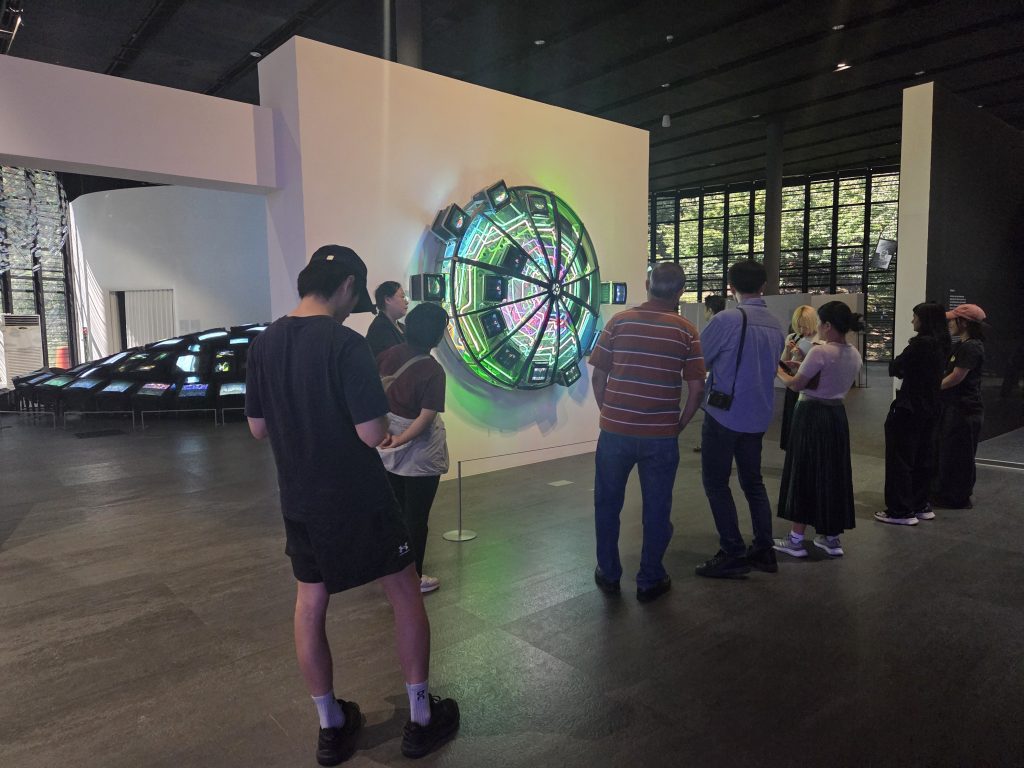
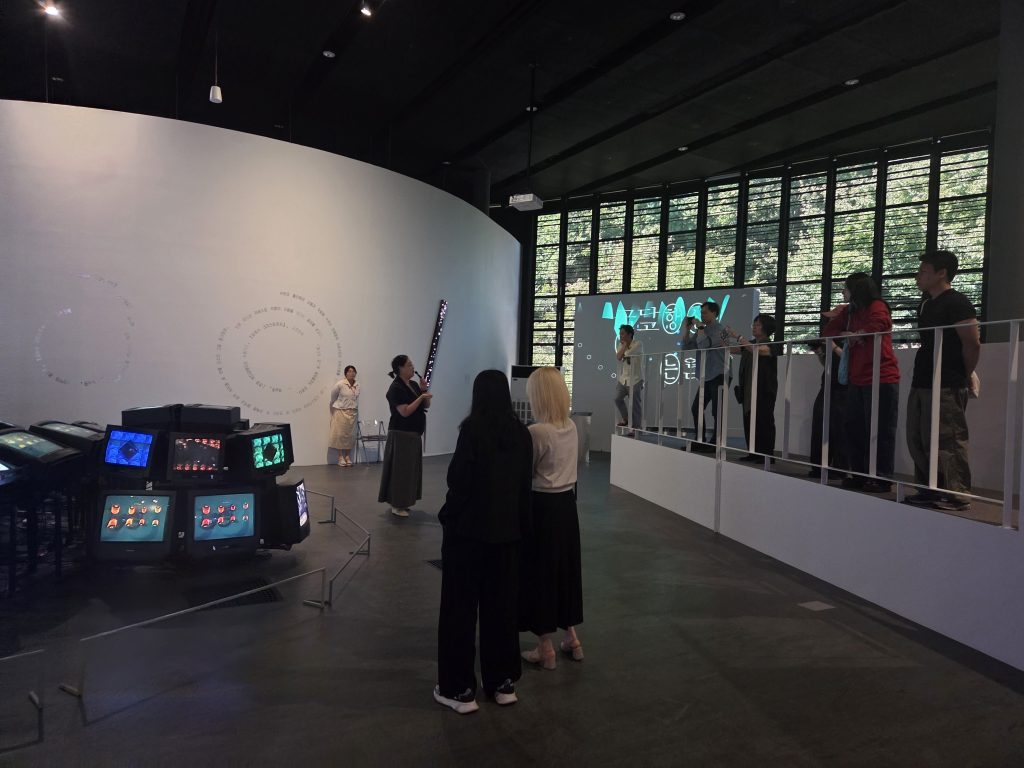
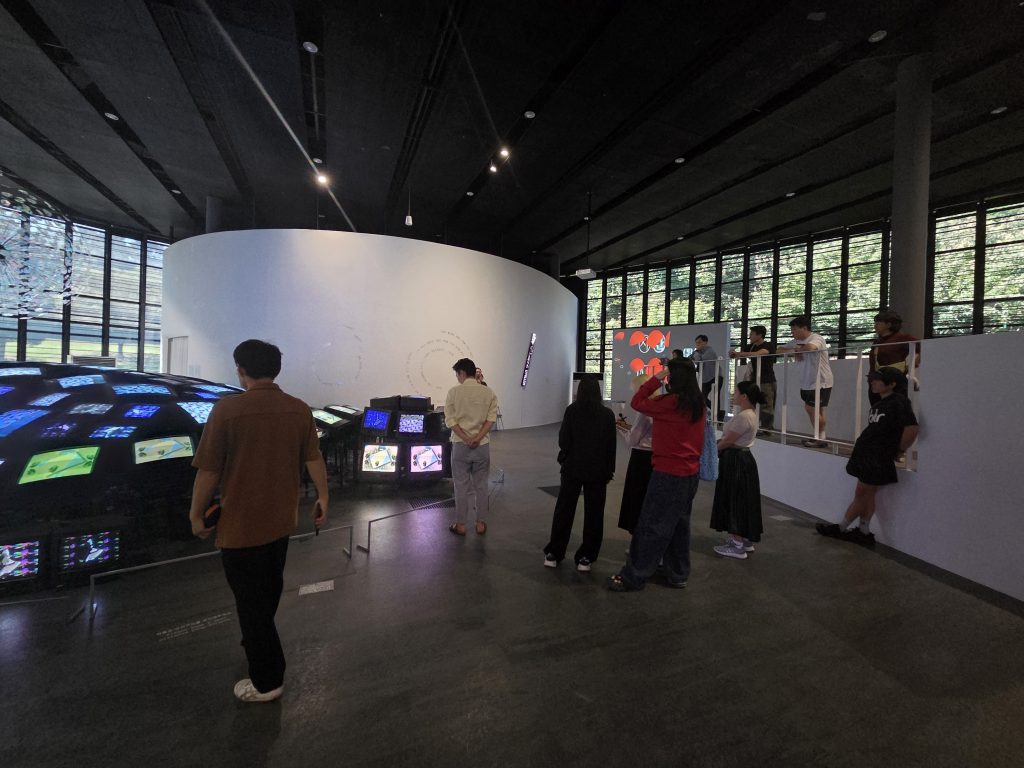
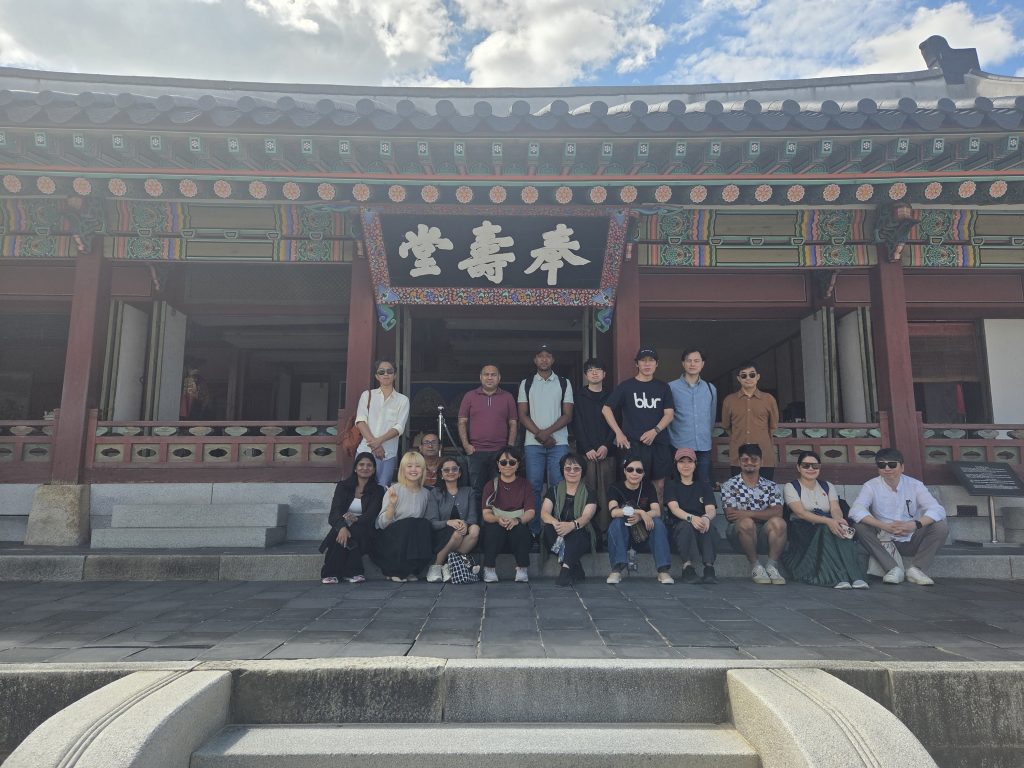
Meeting Gallery
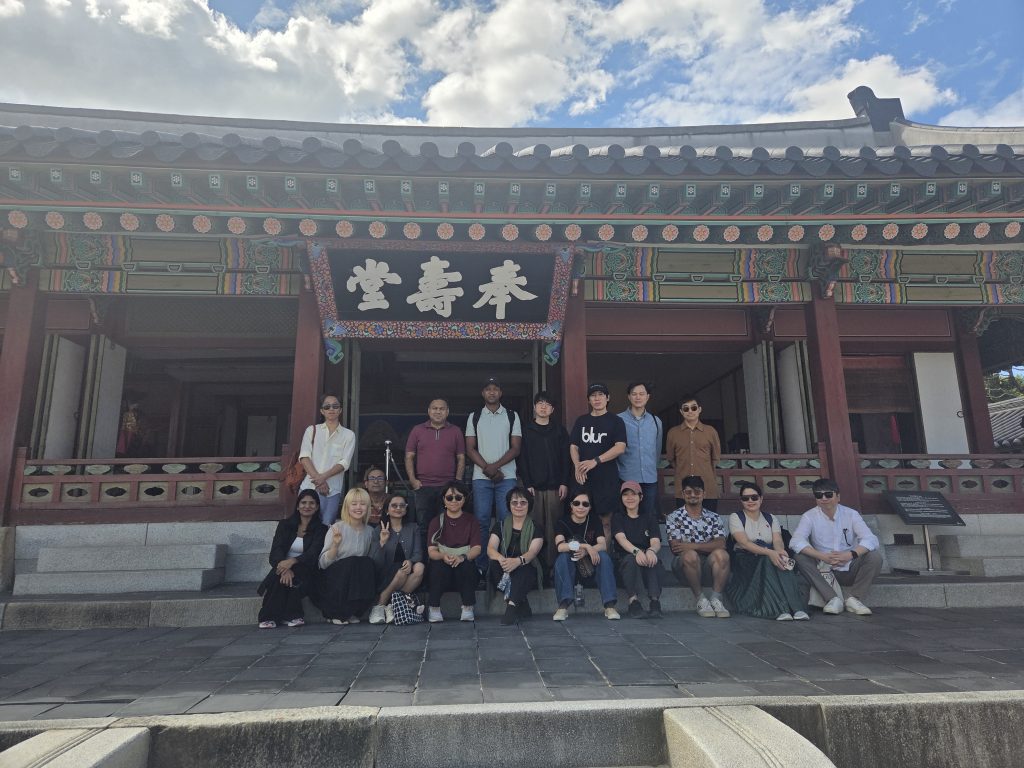
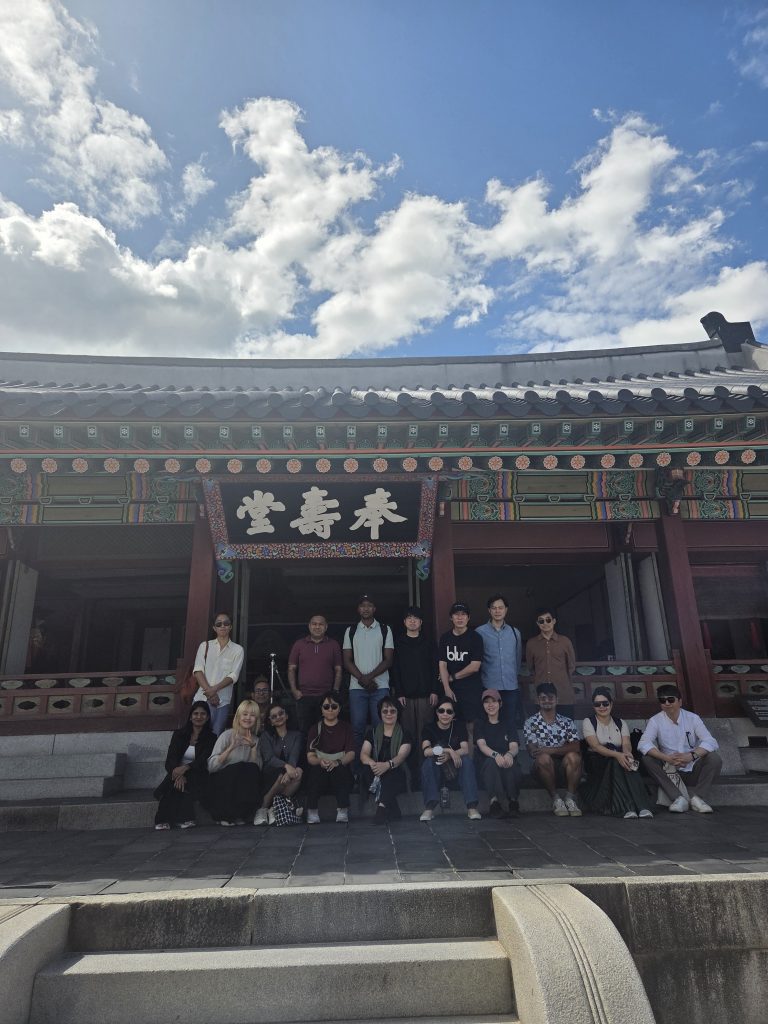
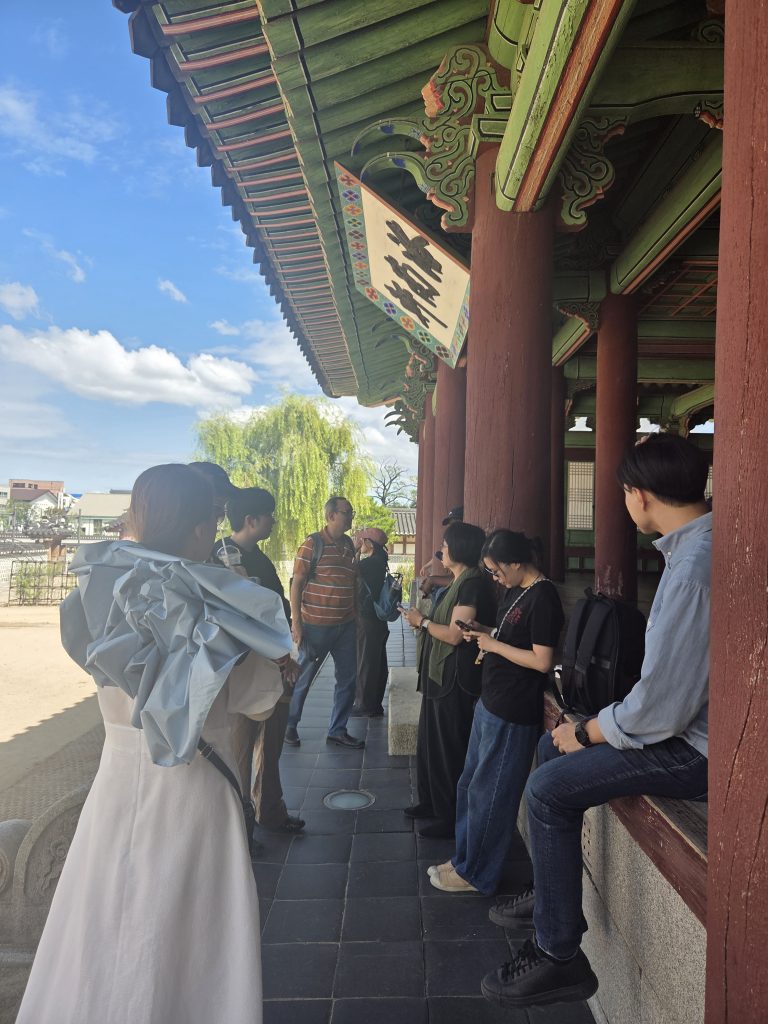
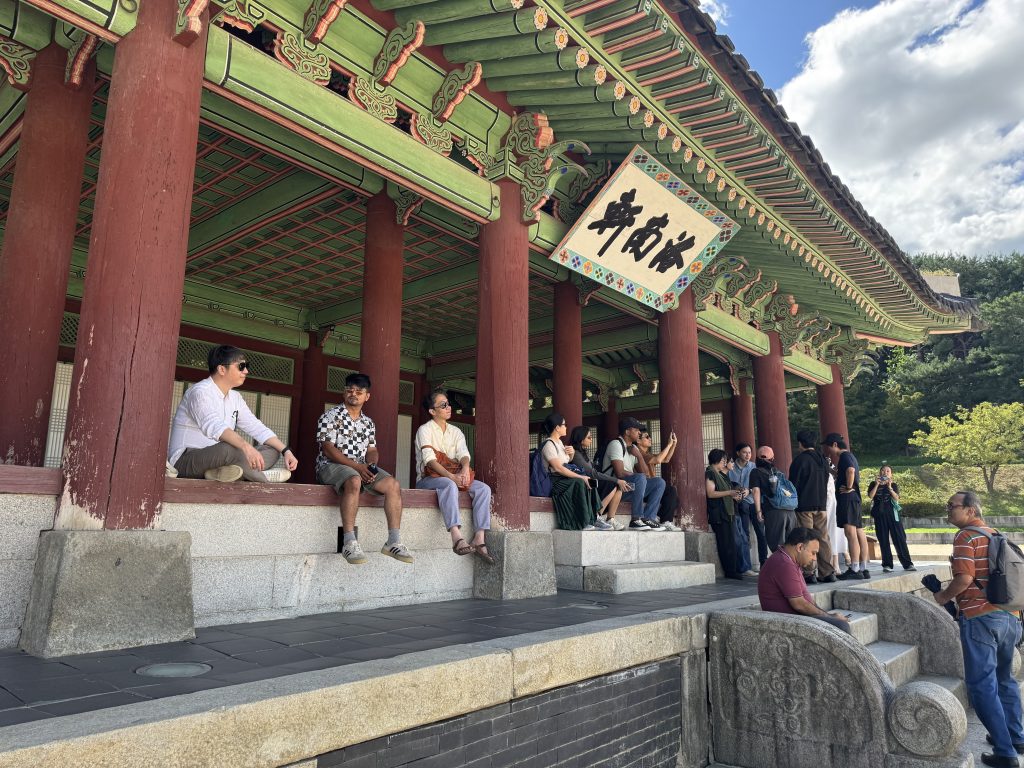
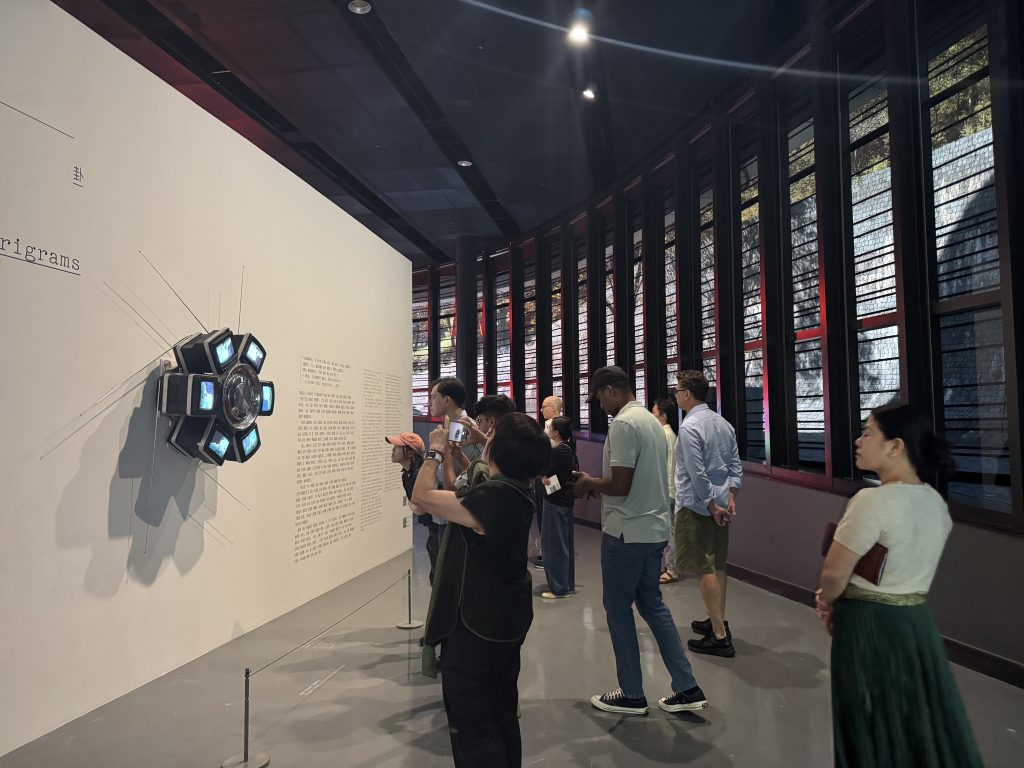
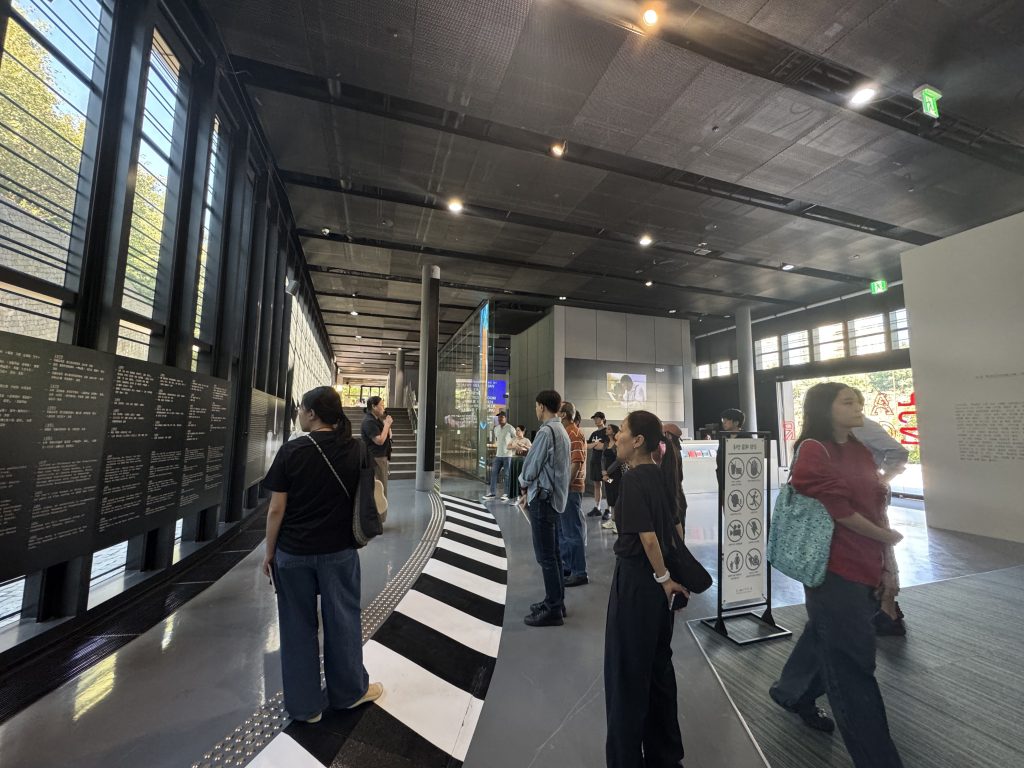
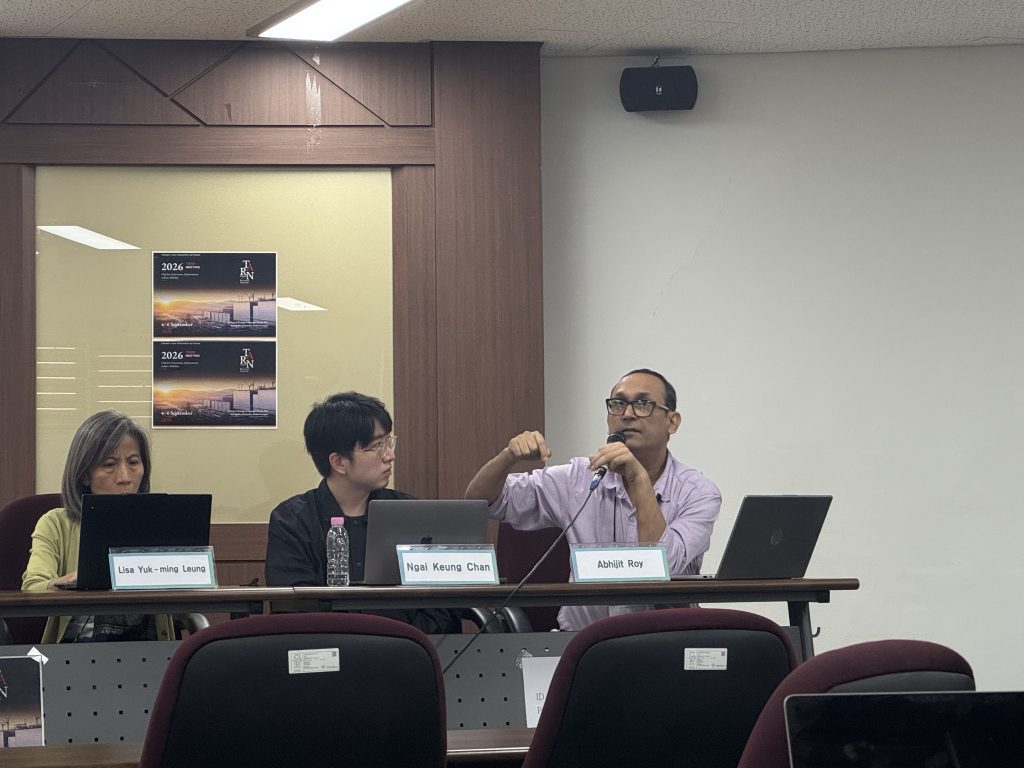
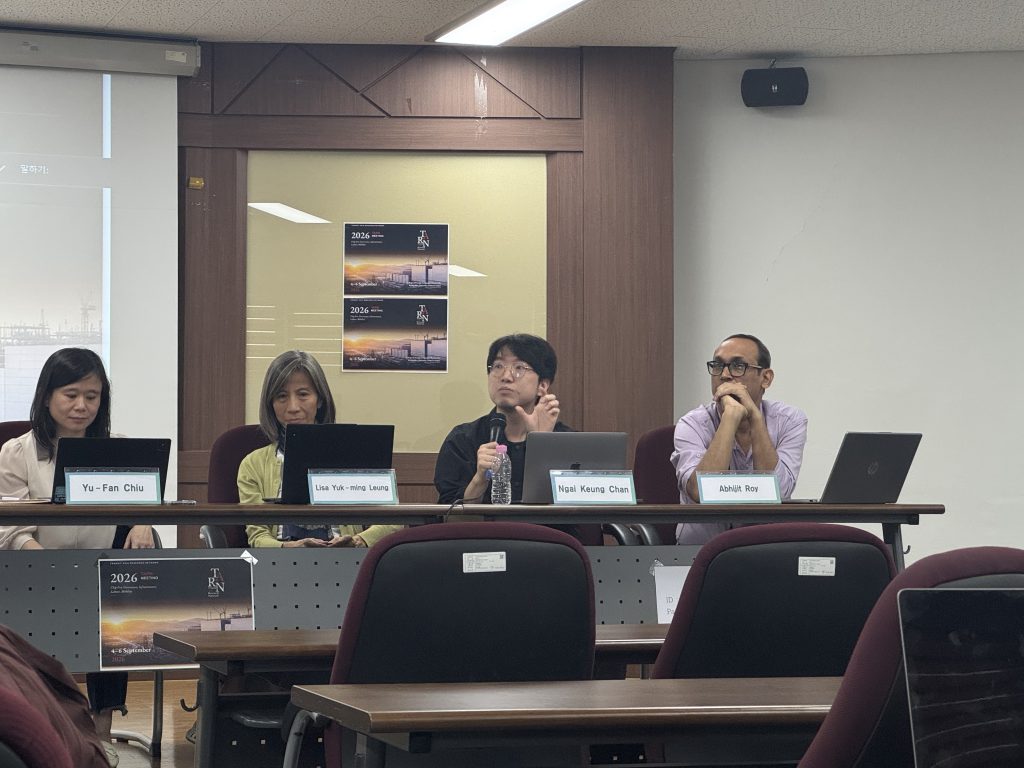
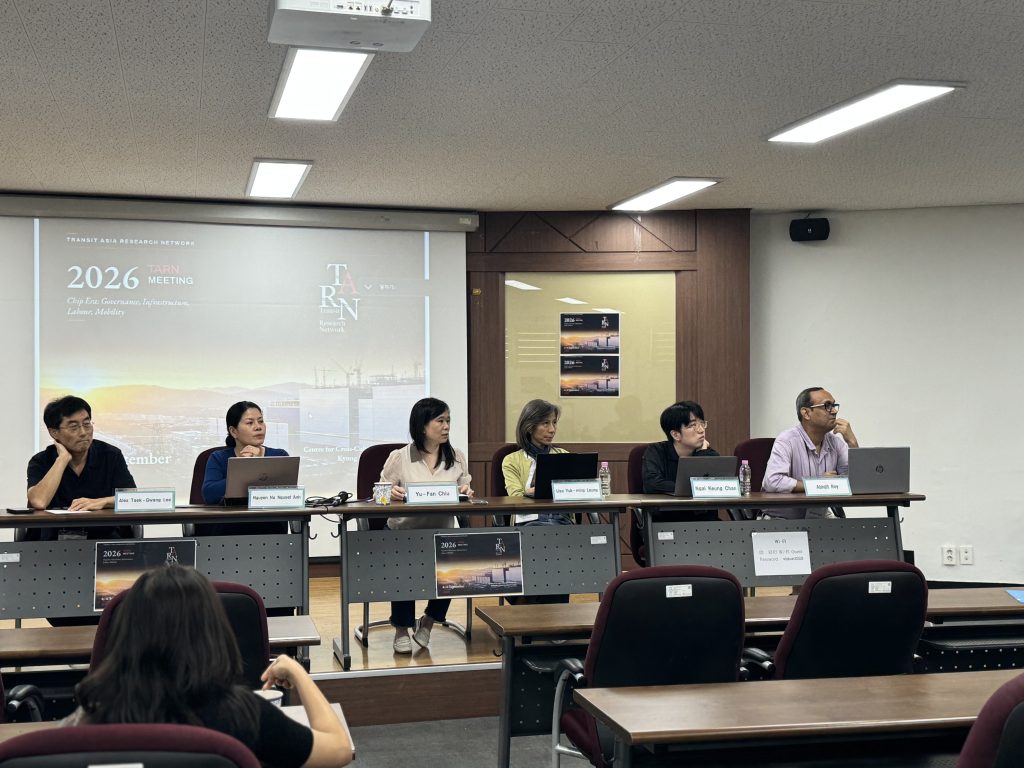
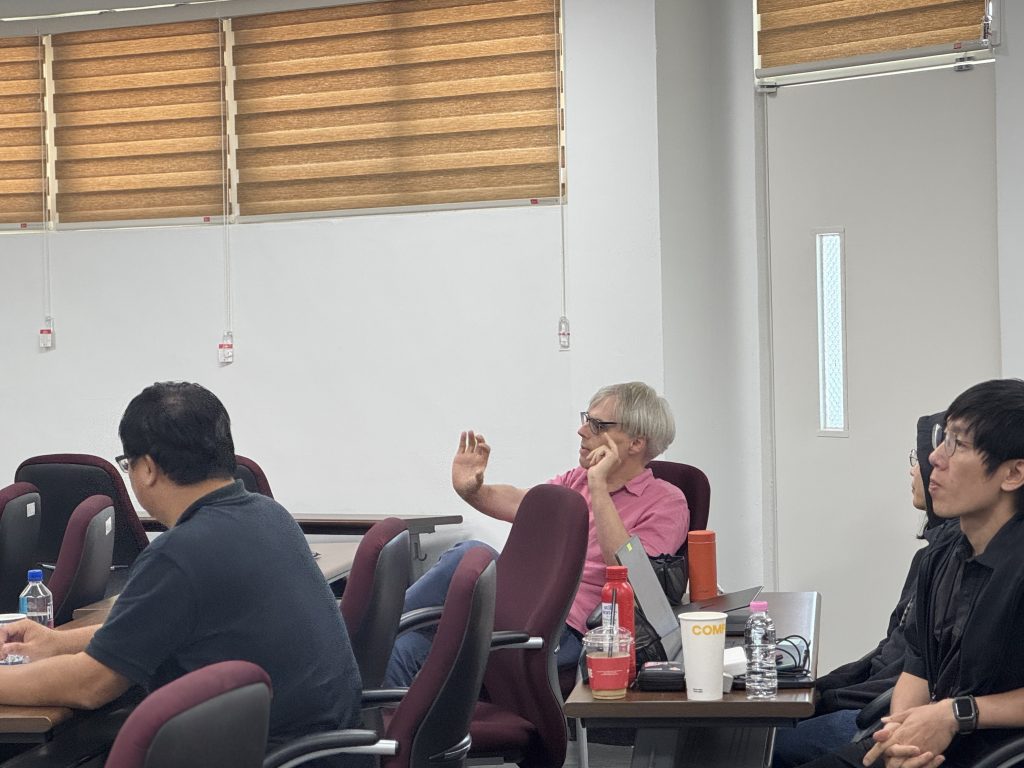
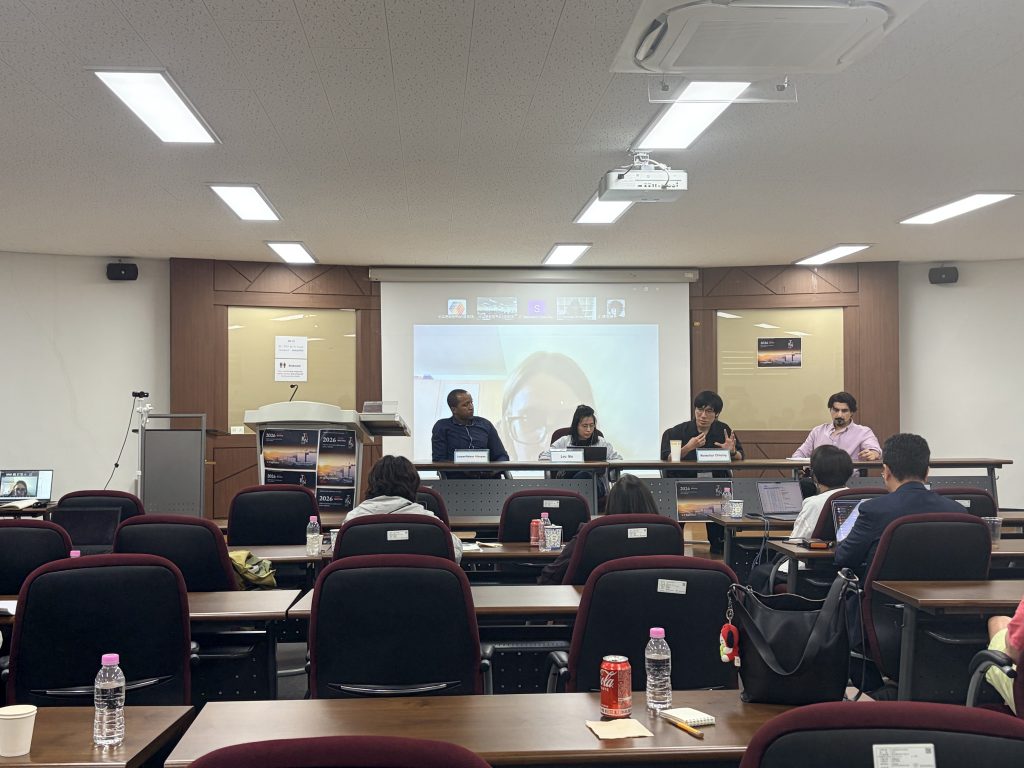
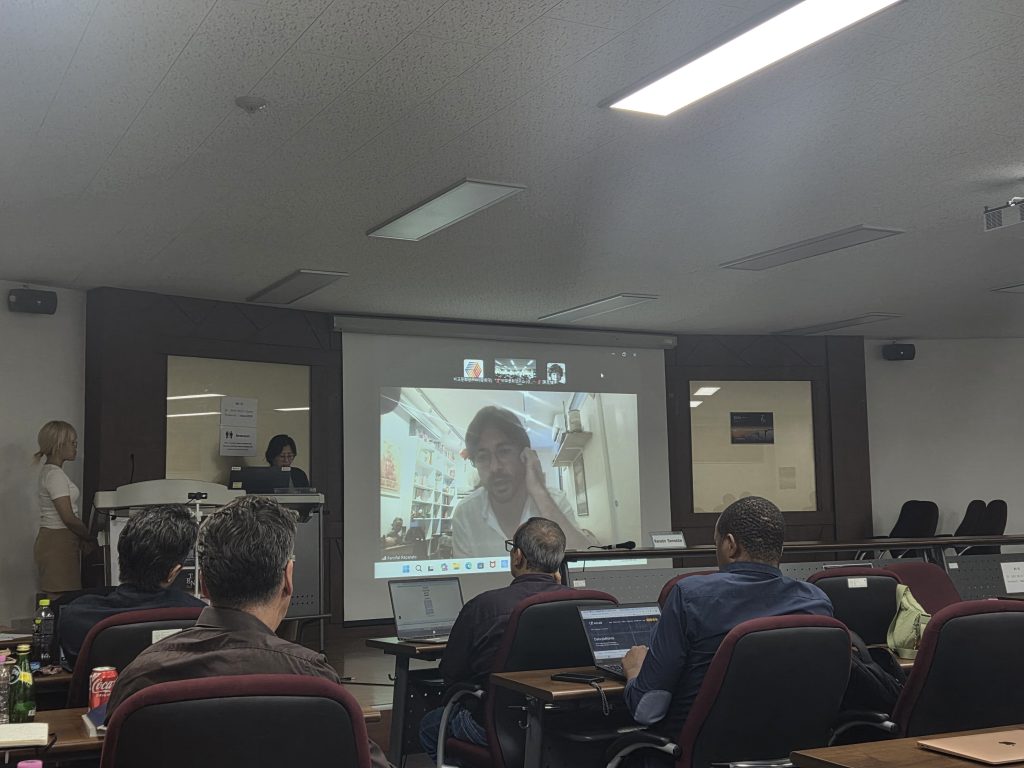
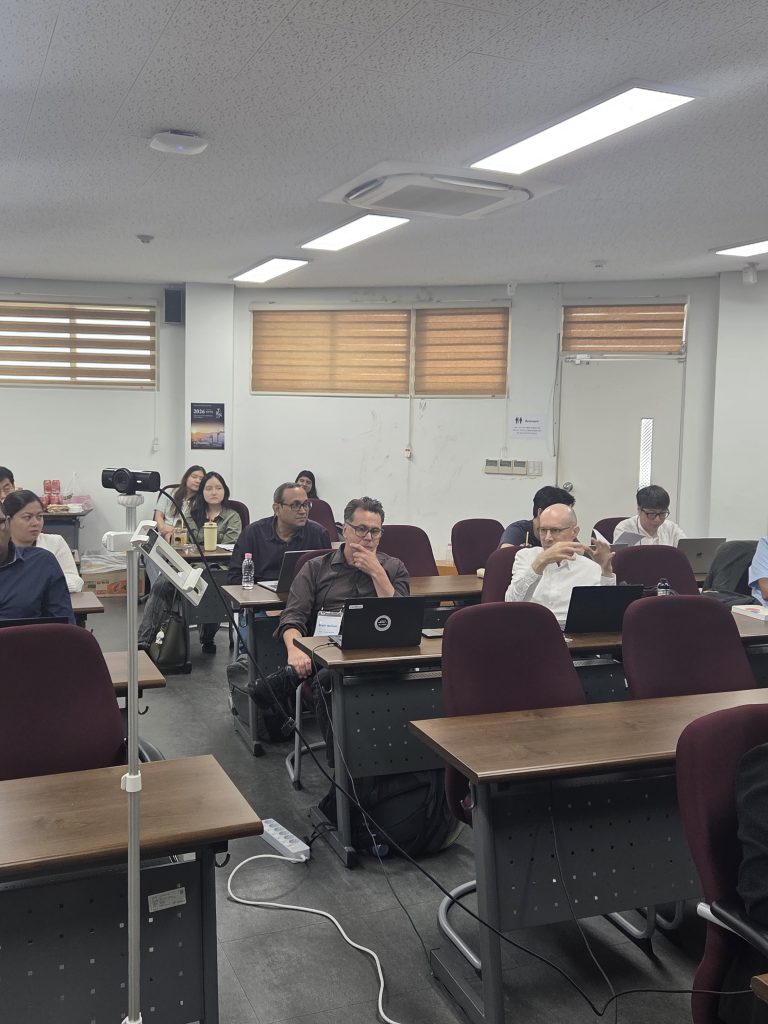
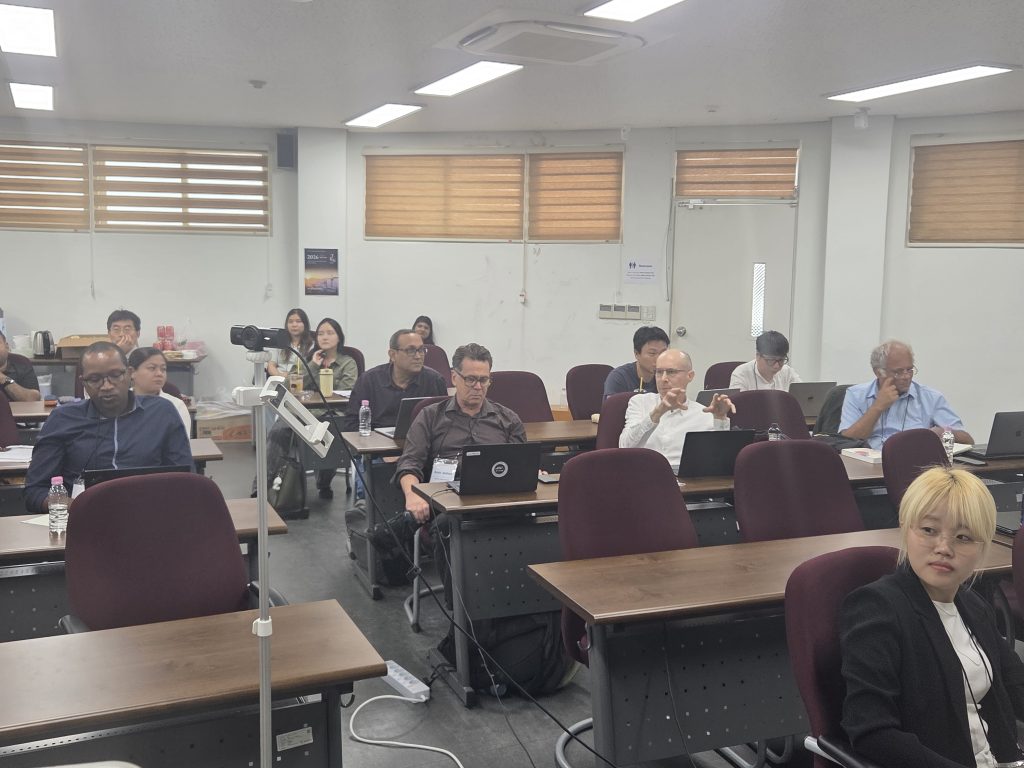
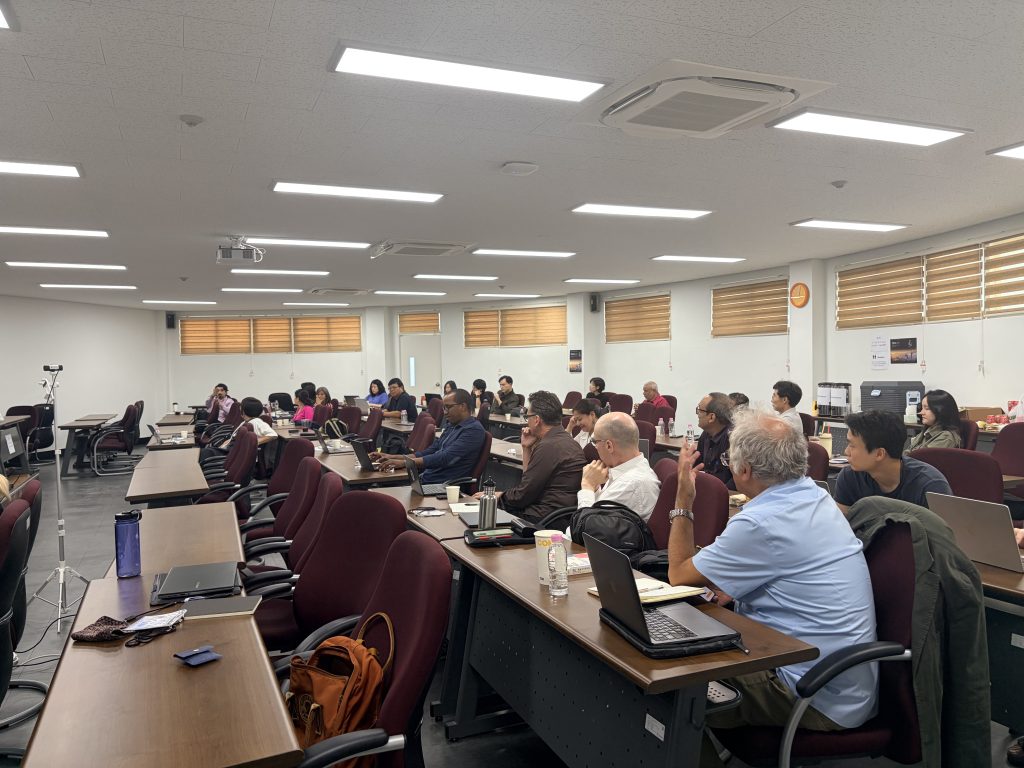
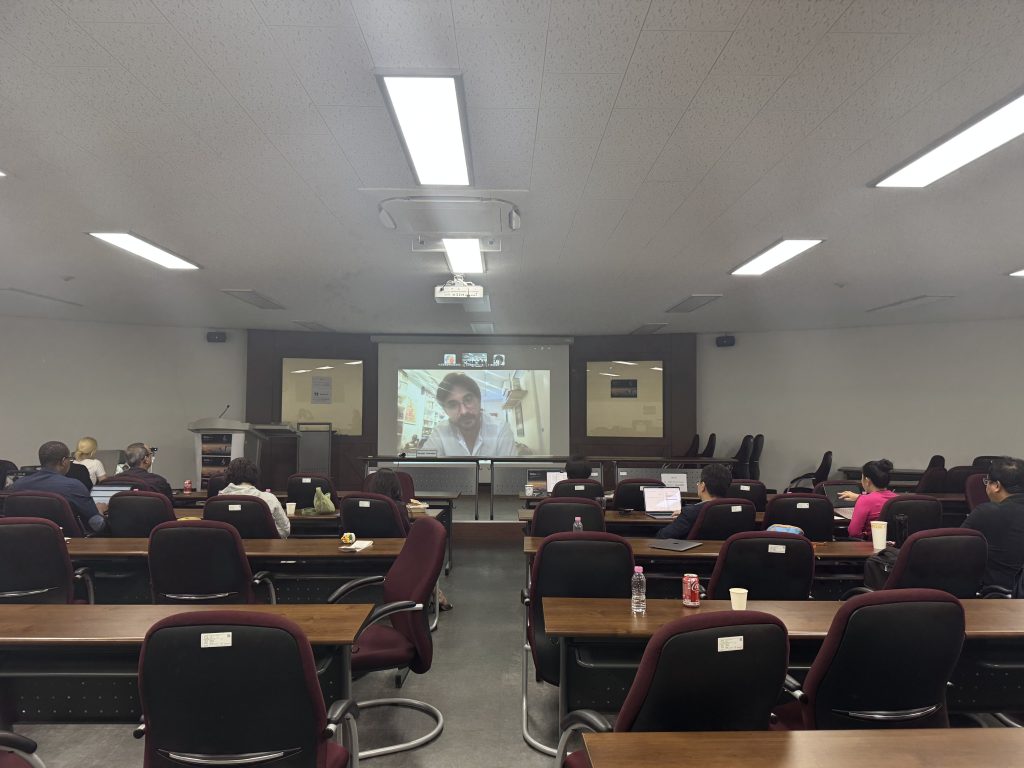
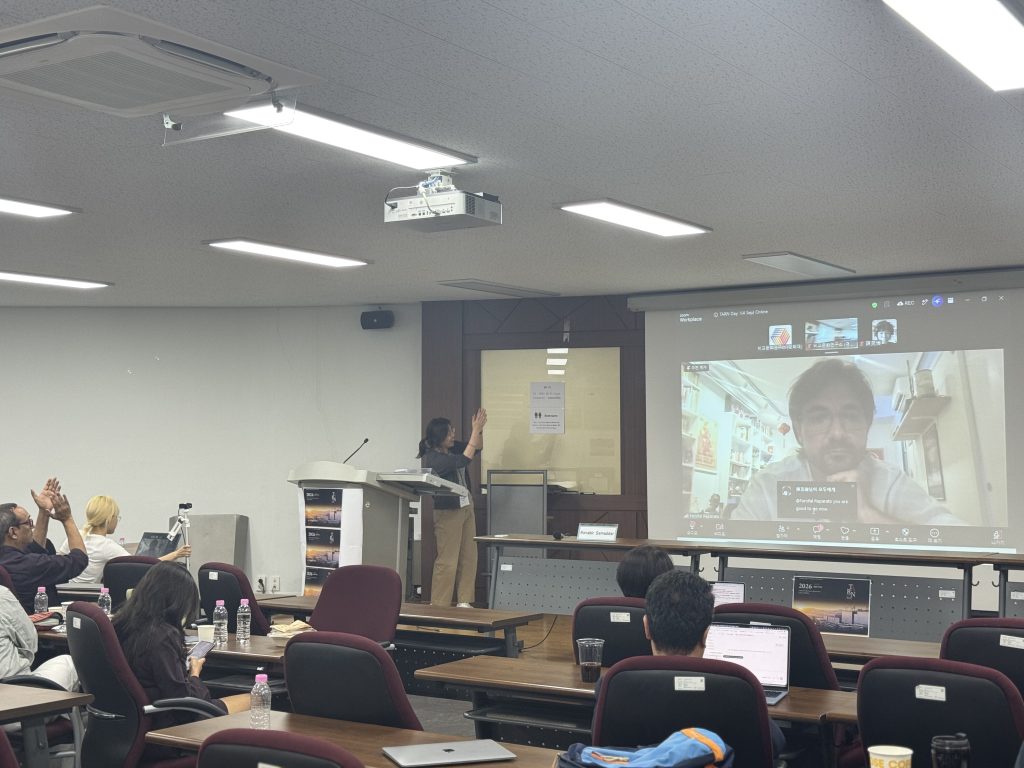
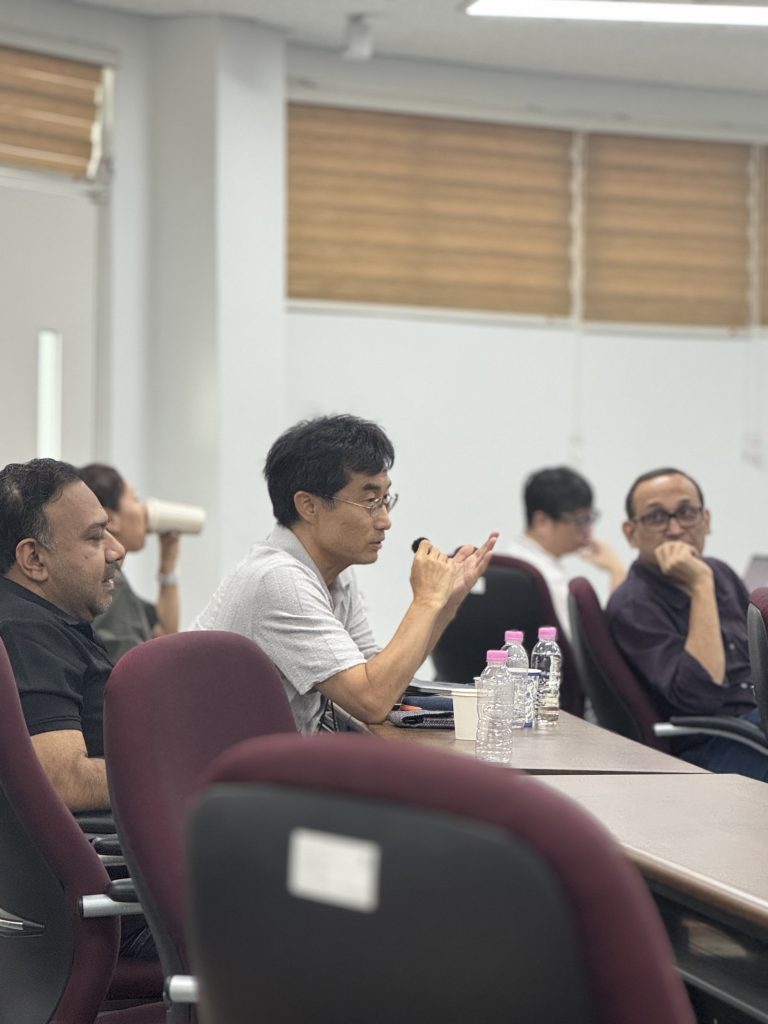
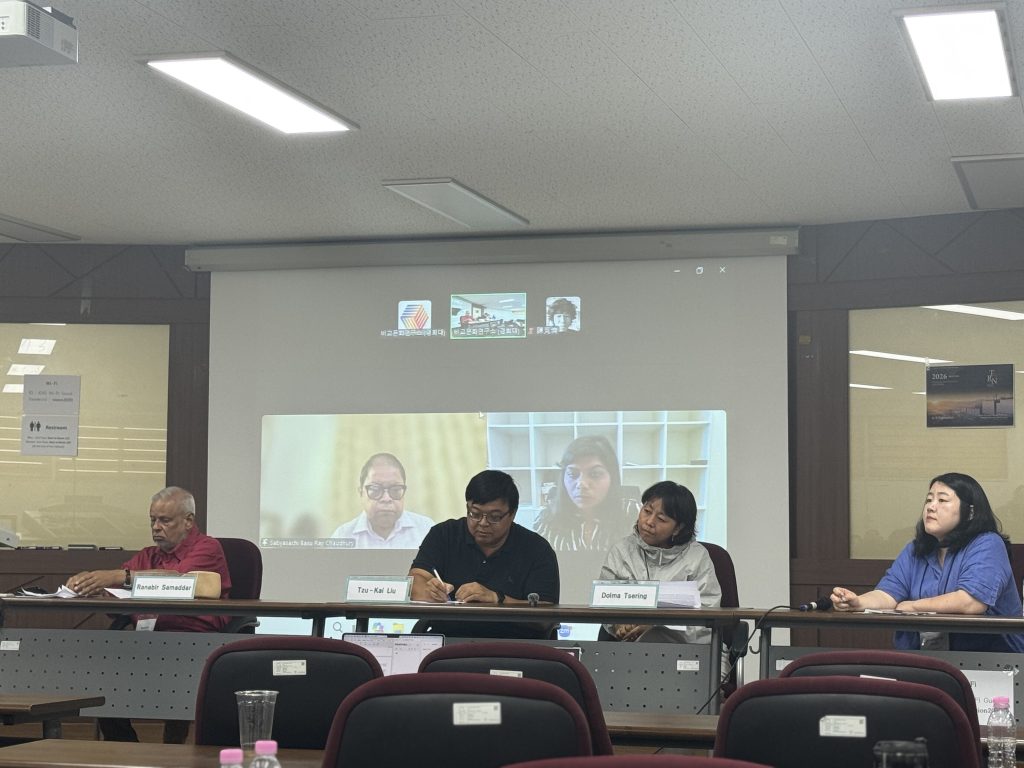
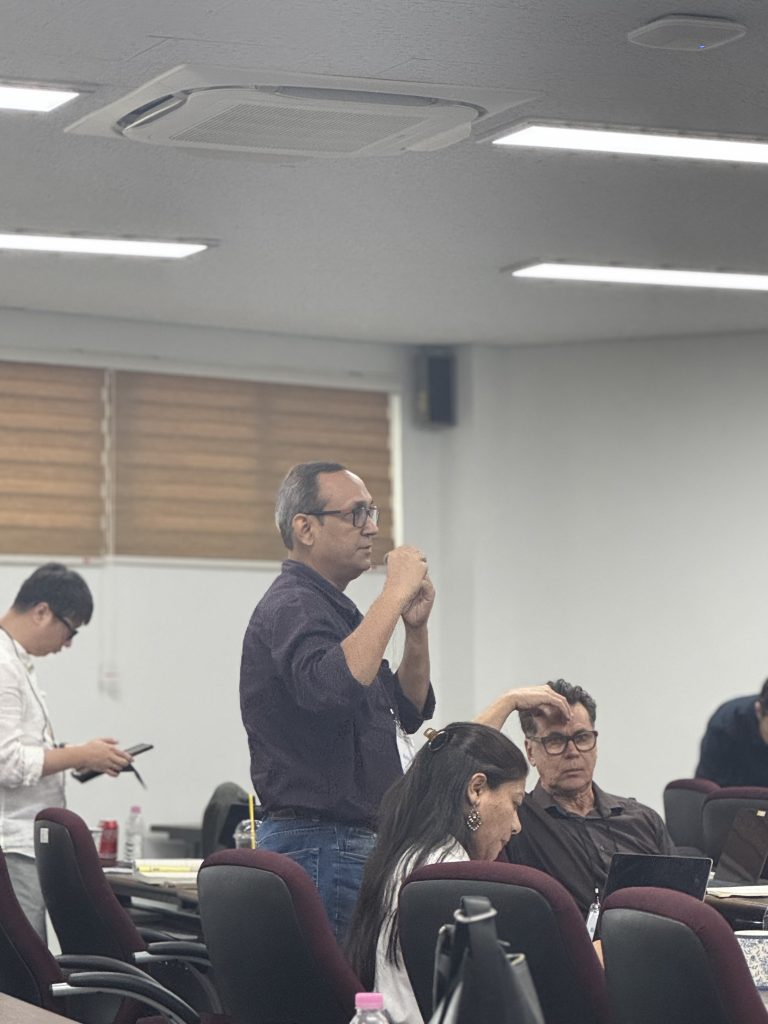
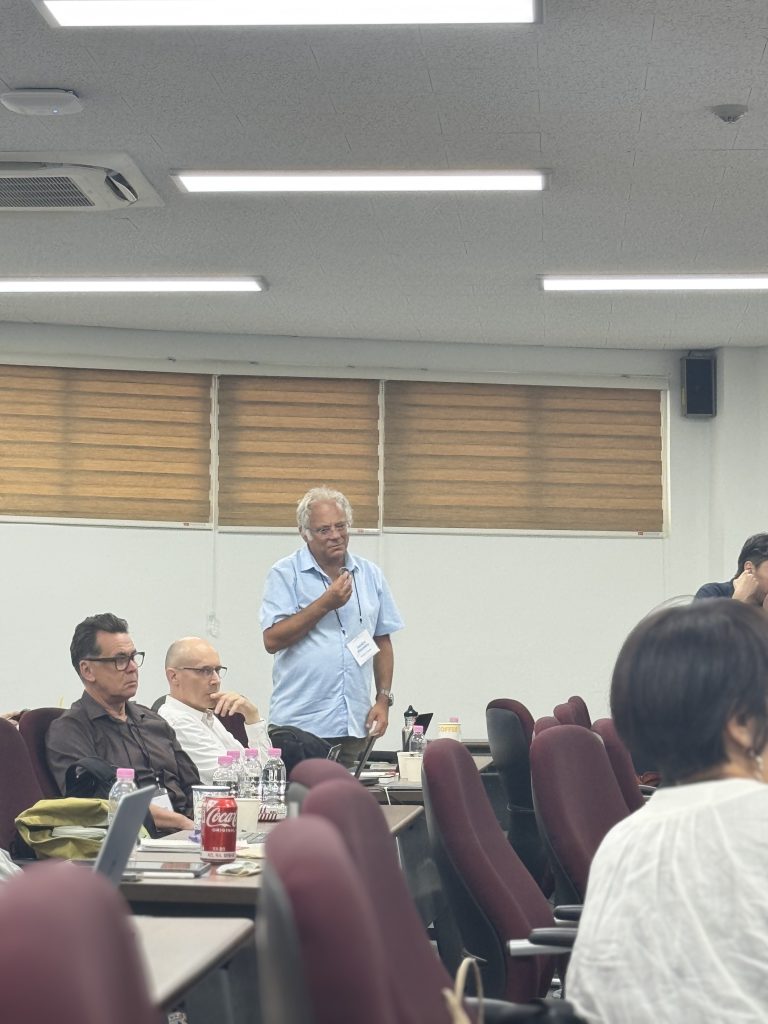
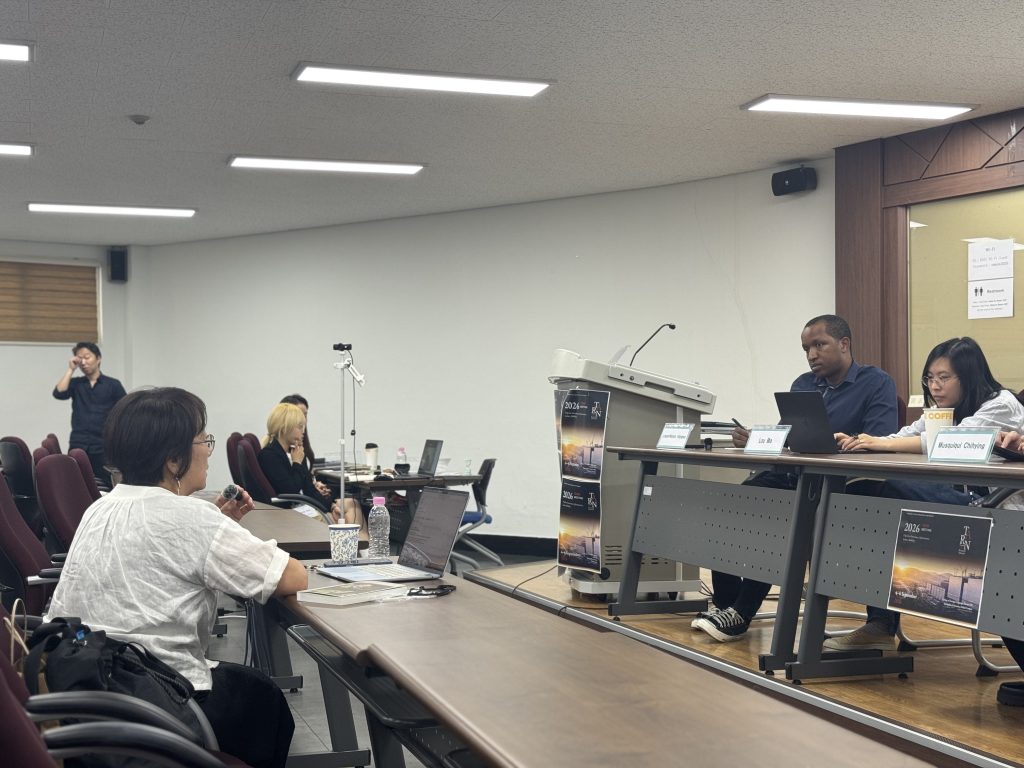
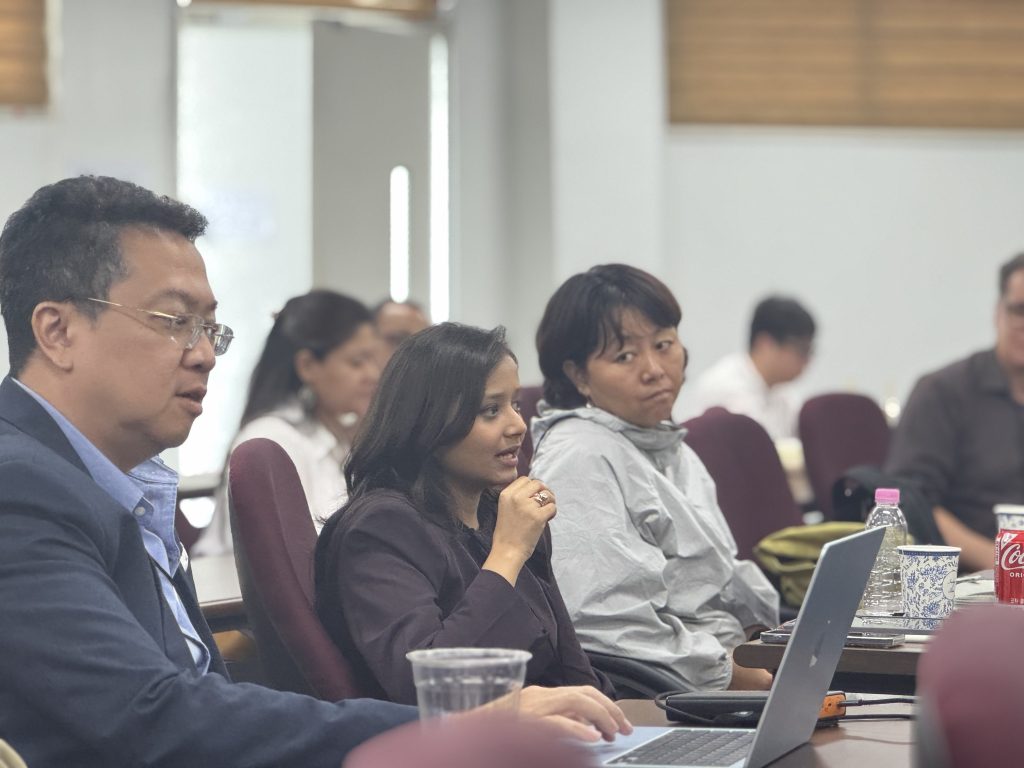
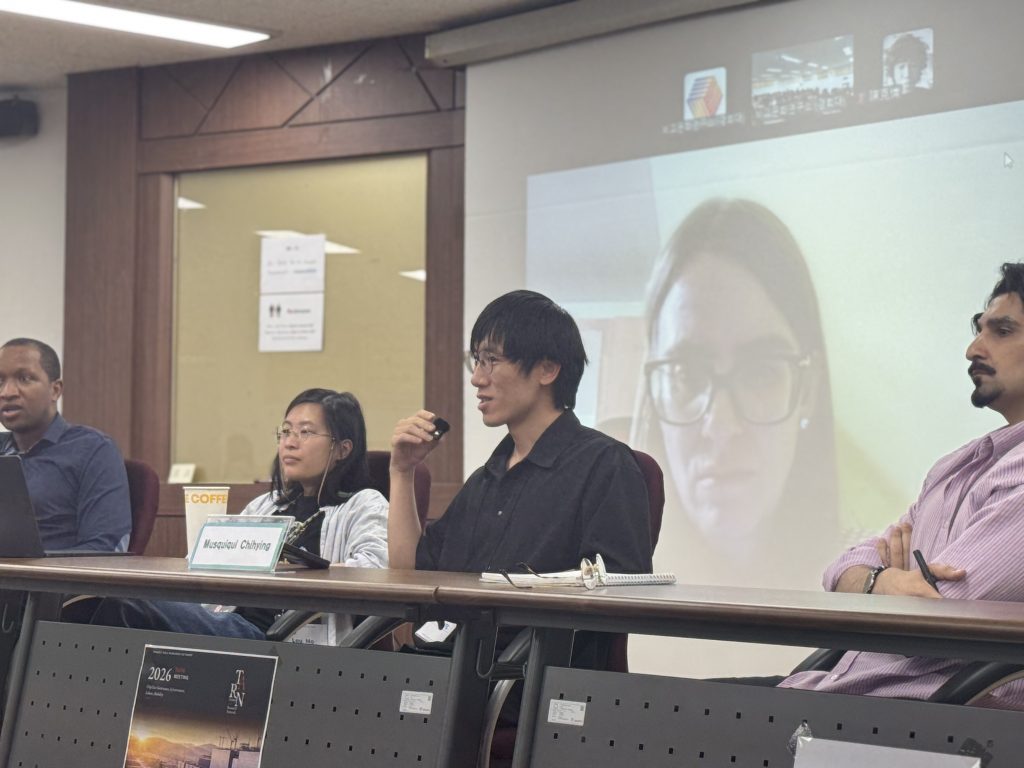
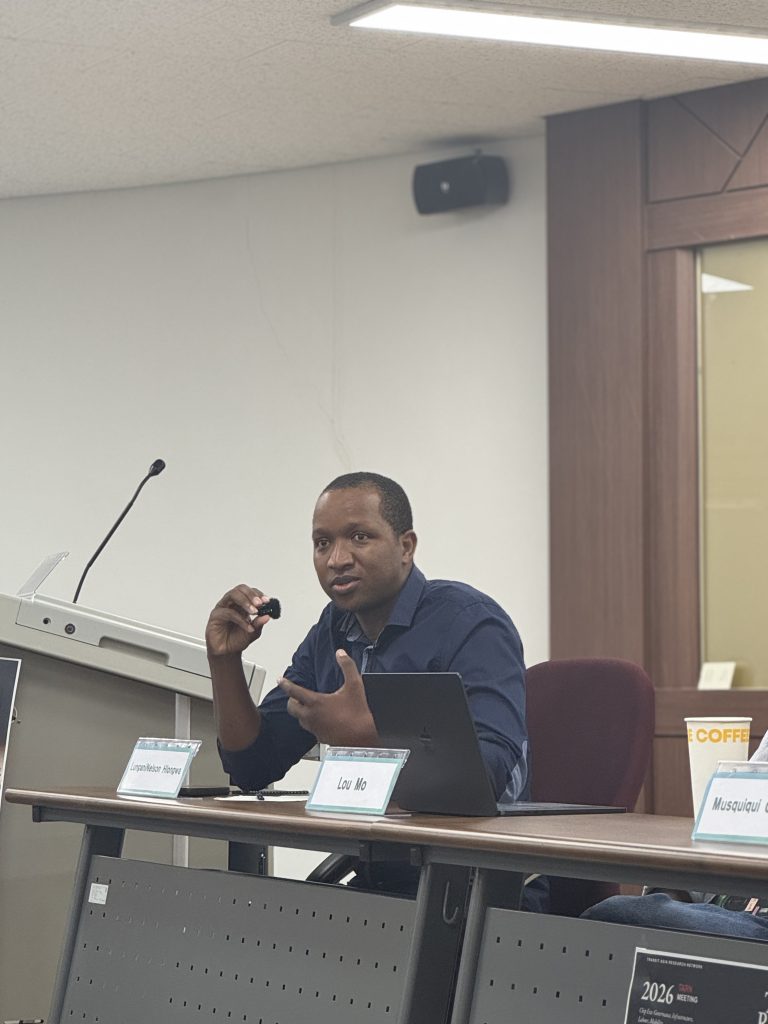
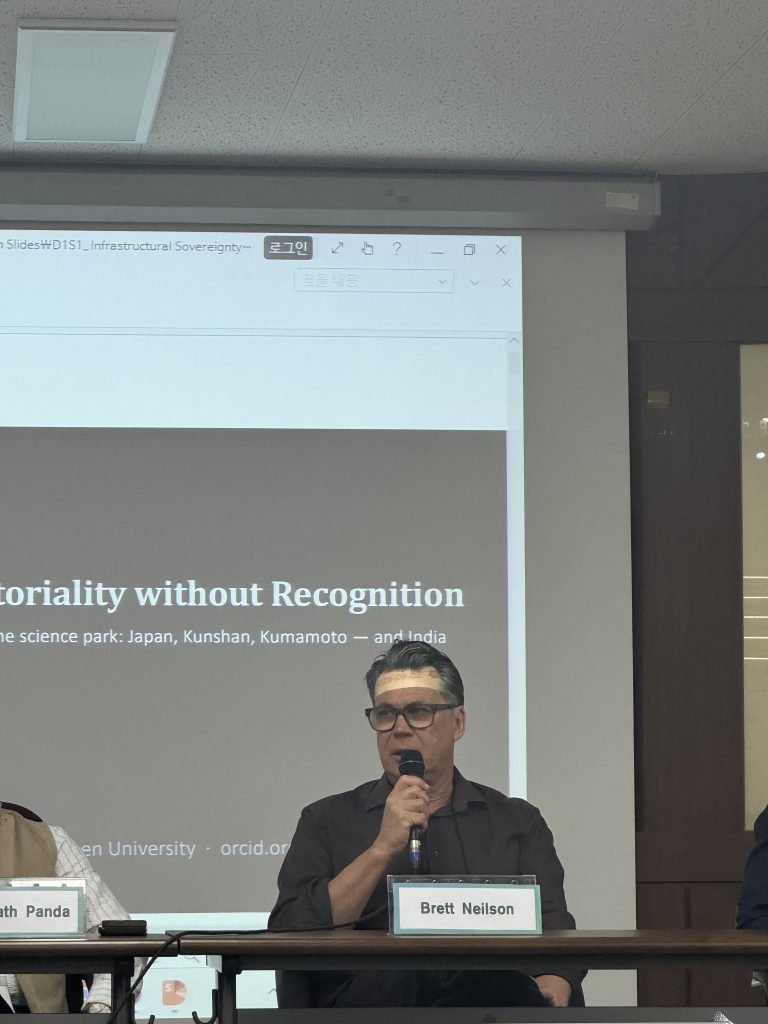
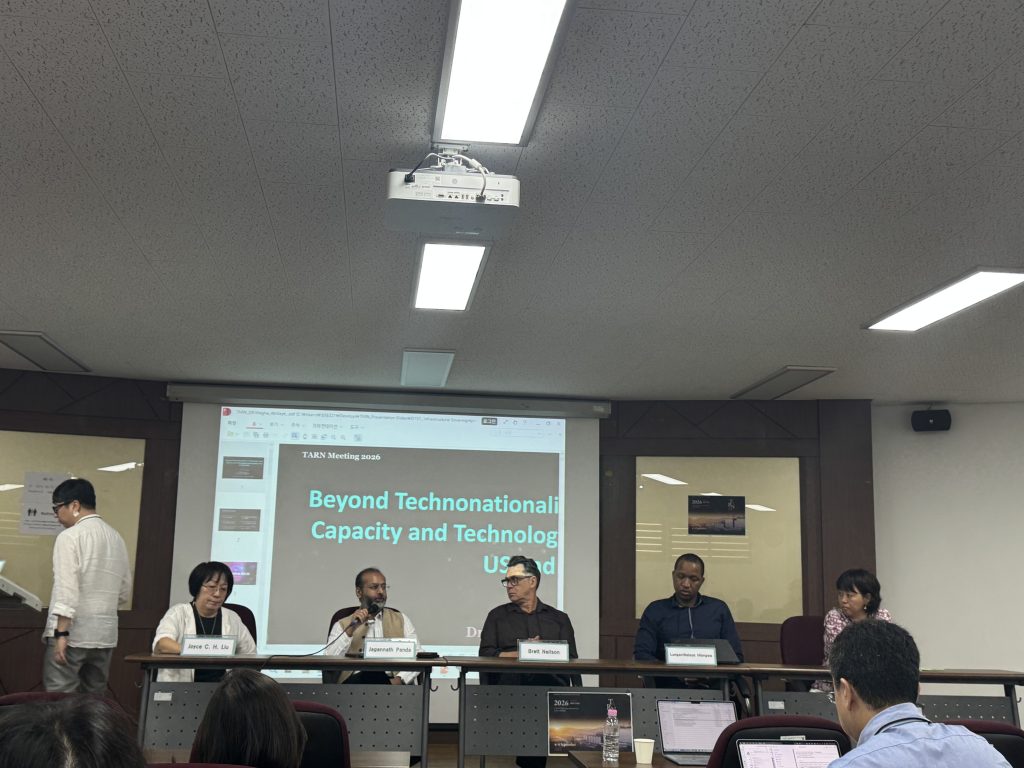
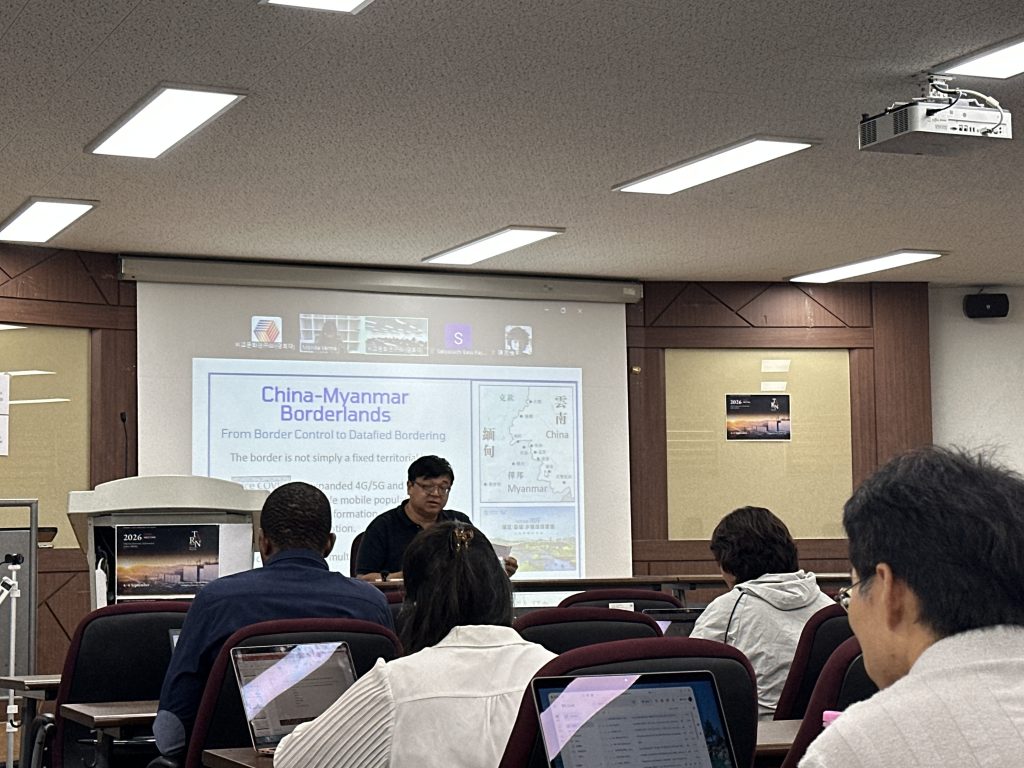
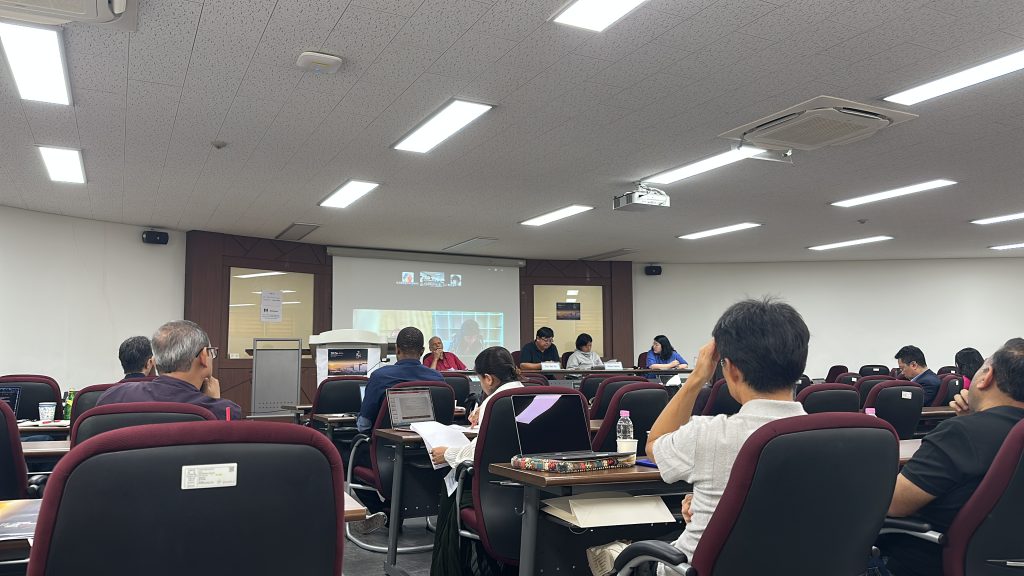
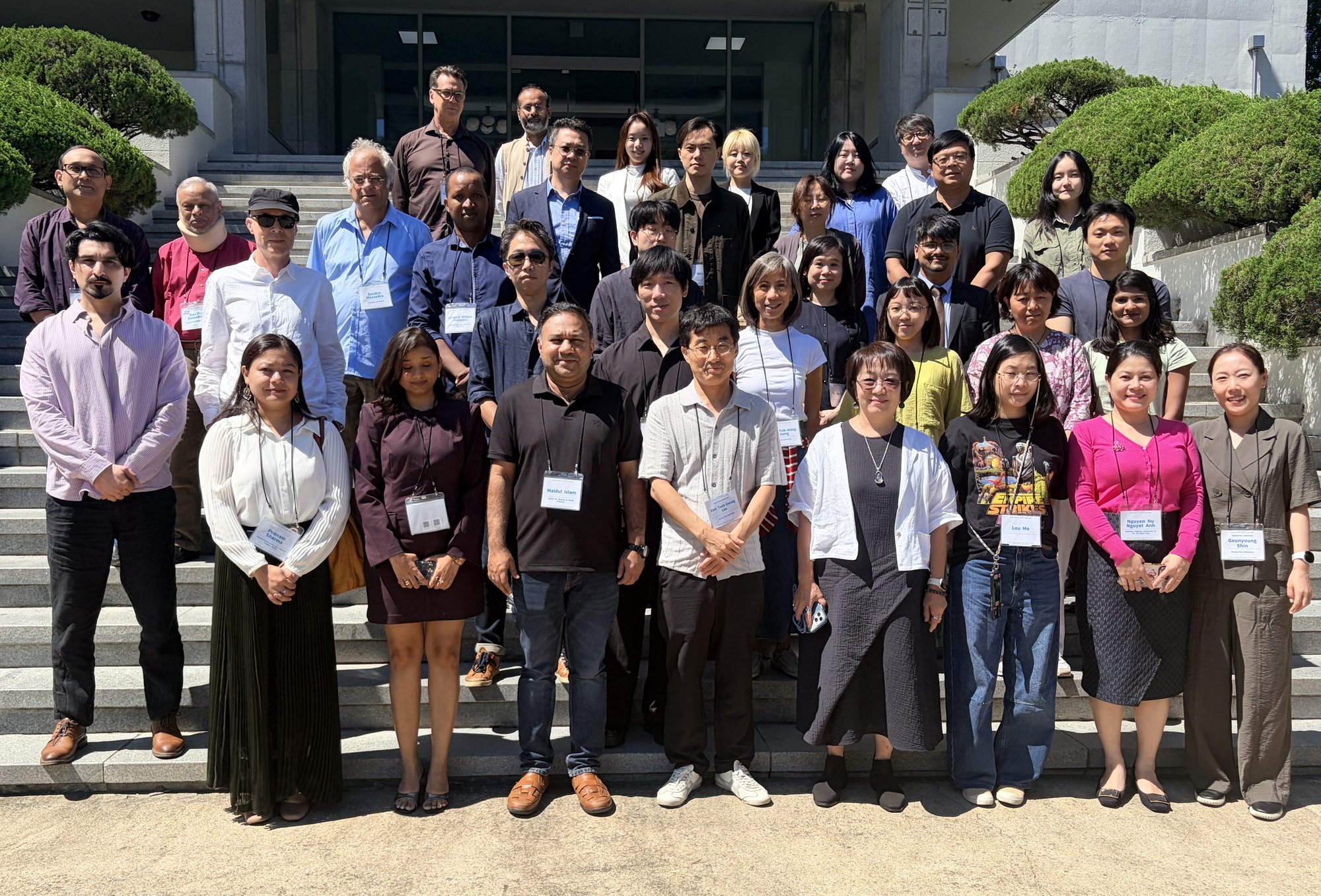
Photographs from the 2026 TARN Meeting.